
✅ Show yourself as a Creator ✅ Help living animals, birds, plants
Pumping up your karma!
Summer holidays are not just a vacation from lessons, but a unique time for self-development, discovering new talents and, most importantly, for manifesting yourself as a conscious creator. Students of the Private International School AISU understand that true greatness lies not only in academic success, but also in the ability to actively interact with the world around them, helping nature, animals, birds and plants. This is the path to “pumping karma” – accumulating positive energy through good deeds that make the world a better and more harmonious place.
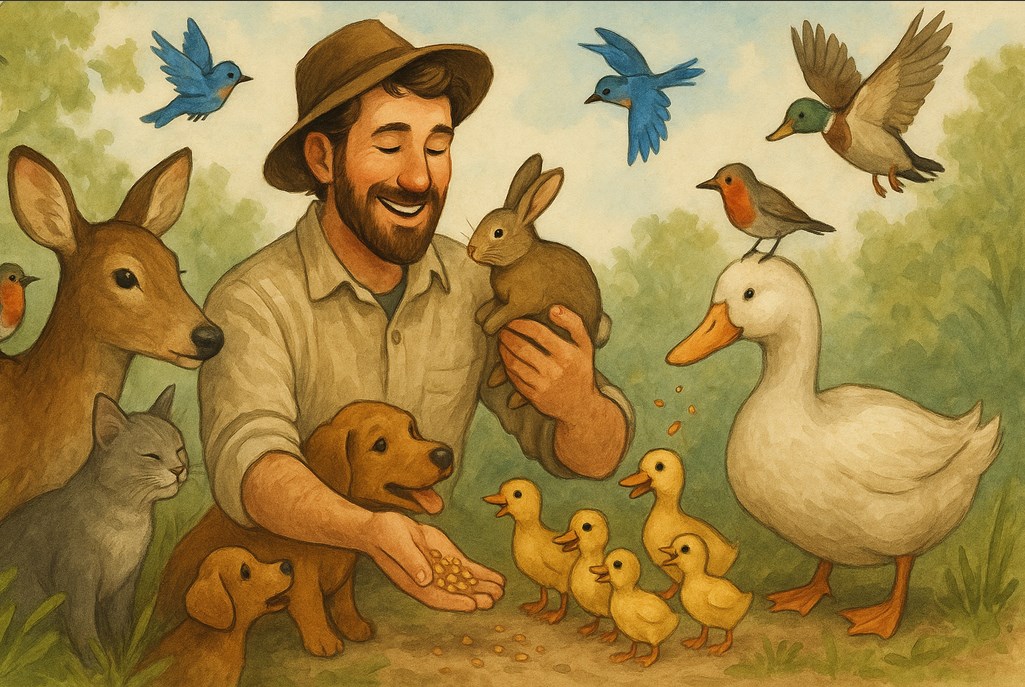 Let’s take a look at how each AISU student can prove themselves useful in the living world by participating in these great achievements:
Trees and plants are the basis of life on Earth. They produce oxygen, purify the air, create shade, and serve as a home for many animals. Helping them is an investment in our common future.
- Join school environmental projects for planting young trees and shrubs in parks, squares, on the territory of the school or your yard. Find out which types of plants are best suited for your region, and help with their planting and subsequent care (watering, weeding).
- If you have a balcony or window sill, create your own mini-vegetable garden. Grow herbs (dill, parsley, basil), small vegetables (cherry tomatoes, radishes) or aromatic herbs. This is not only useful, but also informative: you will see the entire growth cycle from seed to harvest.
- If there are flower beds near your house, offer your help in their care – water the flowers, remove weeds, collect fallen leaves. It makes your surroundings more beautiful and pleasant.
- Pick up the Plant Finder or use special apps on your smartphone to find out the names and features of plants growing around you. The more we know, the more we value it.
Animals are an integral part of nature, and many of them need human help. Caring for them is a manifestation of mercy and responsibility.
- Feeding and caring for birds. In the cold season, it is difficult for birds to find food. Make a feeder (for example, from a plastic bottle) and regularly fill it with grain, unsalted lard (for Bluebirds) or sunflower seeds. Watch what birds come to your feeder.
- Help for homeless animals. If you see a stray animal that needs help (injured, hungry), do not pass by. Contact adults, local animal shelters, or volunteer organizations. You can become a temporary guardian for your kitten or puppy until they find a home.
- Responsible attitude to pets. If you have a pet, remember that this is a big responsibility. Feed him, walk him, play with him, take care of his hygiene. It teaches discipline and empathy.
- Learn about the local fauna. Find out what wild animals live in your area (even in the city it can be hedgehogs, squirrels, ducks, various types of birds). Learn about their habits and how you can help them without harming them.
Clean environment is the key to health for everyone. Everyone can join in maintaining cleanliness and rational use of resources.
- Gather your friends or family and arrange a mini-Subbotnik in the nearest park, forest or on the shore of a pond. Collect plastic, glass, and paper and sort it for further recycling. You will be surprised how much garbage can be collected, and how the territory will change after your work.
- Set up a separate waste collection system – separate containers for paper, plastic, glass, metal, and organic matter. Make sure that the collected garbage is recycled.
- Turn on the faucet when you brush your teeth, take a short shower, not a bath. Use rainwater to water your plants, if possible.
- Turn off the light when you leave the room. Unplug Chargers and electrical appliances when not in use. Make sure that your computer or TV is not running “in the background”.
- Replace disposable bags with eco-friendly bags, plastic bottles with reusable ones, and disposable tableware with your own or rented ones. This will reduce the amount of waste that ends up in landfills.
- Invite parents to buy eco-friendly detergents, laundry detergents that do not contain phosphates and other harmful substances.
Being a creator means not only physical actions, but also constant search for new solutions, informing others, and inspiring change.
- Use your summer vacation to deepen your knowledge of Ecology. Experiment with local ecosystems, study the problems of water or air pollution in your region. Perhaps you will find an interesting solution to some environmental problem.
- Create drawings, posters, and installations from recycled materials that draw attention to environmental issues. Write an ecological fairy tale, poem, or song. Use your talent for good deeds.
- Share your knowledge and experience on social networks, among friends and relatives. Talk about the importance of sorting garbage, saving resources, and planting trees. Your example can inspire others.
- Experiments on how the latest technologies (for example, solar panels, electric vehicles, water purification systems) help preserve nature. Perhaps this will inspire you to pursue a future profession in green technologies.
Pumping karma through good deeds!
Summer holidays are a golden time to prove yourself as a creator, responsible citizen and true friend of nature. Every good deed, from a planted tree to a sorted bottle, responds with positive energy in the universe. This is the very” karma pumping ” – investing in good, which is sure to return in the form of inner harmony, respect for others and, most importantly, a healthy and flourishing planet for all of us. AISU students understand this and are happy to accept the challenge of becoming a driving force for positive change.
Help live animals
In the modern world, where the pace of urbanization is growing, and the natural environment is under constant pressure, the issue of helping live animals is becoming particularly relevant. Students of the Private International School AISU in Kiev do not just realize this importance – they live it. Every young person, as an assistant to the creator, feels in his heart a deep need for empathy and help in wildlife. This inner empathy, combined with education and an active lifestyle, translates into concrete actions that make the world a better place for all its inhabitants.
Understanding that humans are an integral part of a large ecosystem and are responsible for its balance is a cornerstone of AISU’s philosophy. We teach children not just to observe the world, but to actively interact with it, to be caring guardians and defenders of those who cannot speak for themselves.
Here are some effective ways that AISU students and everyone can help live animals, described in detail:
- Support for shelters and volunteer organizations.
- many animal shelters are overcrowded and need constant help. This can include both financial support (donations) and physical labor (volunteering).
- students can walk dogs, play with cats, clean enclosures, and help distribute food. This is not only physical assistance, but also socialization of animals, which increases their chances of adoption.
- organize the collection of feed, blankets, toys, medicines for animals in shelters among classmates and friends.
- help shelters spread information about animals looking for a home on social media or among acquaintances.
- in the cold season, as well as in urbanization conditions, it is difficult for wild birds (titmice, sparrows) and urban animals (squirrels, hedgehogs) to find enough food and safe housing.
- bird feeders-make or purchase a feeder and regularly fill it with appropriate food (grain, sunflower seeds, unsalted lard, unsweetened crumbs).
- houses for squirrels/hedgehogs – if you have a garden or plot, you can make a simple house for squirrels or a place for wintering hedgehogs (a small canopy with leaves).
- proper food – it is important to know what food is safe and useful for certain types of animals (for example, bread is harmful to ducks, it is better to give them grain or special mixed feed).
Environmental pollution (plastic, garbage, chemicals) is one of the biggest threats to wildlife.
- Cleaning of Parks and forests. Participate in garbage collection campaigns in forests, on the banks of rivers and lakes. Plastic waste, fishing nets, and glass can become traps or cause animal deaths.
- Sorting garbage. Introduce separate garbage collection at home to reduce the amount of waste that ends up in landfills.
- Rejection of single-use plastic. Minimize the use of disposable bags, dishes, and tubes that are a serious source of contamination.
- Many problems with animals arise due to ignorance or indifference of people. Education is a powerful tool for change.
- Share knowledge about the importance of preserving the animal world with friends, relatives, and on social networks. Explain why you can not take young wild animals home, why you can not feed animals with harmful food for them.
- Organize small educational events in the school or yard, create posters and drawings on the topic of animal protection.
- Animal migration, especially in spring and autumn, often intersects with roads, leading to accidents.
- For those who have driver parents, remind them to be especially careful on the roads, especially at dusk and at night, when the animals are more active.
- Help for wounded animals. If you see a wounded wild animal, don’t try to approach it yourself. Notify adults, veterinary or animal rescue services immediately.
- Often people mistakenly take “abandoned” cubs, although their mother may be nearby. Leave them in place and watch from afar.
- A large number of animals in shelters are waiting for loving owners. Adoption is a chance for a new life for the animal and the fight against illegal breeding.
- If a family has decided to get an animal, encourage parents to consider adopting from a shelter instead of buying from a pet store or breeders. This is a direct path to saving lives.
- Feeding and housing construction for wild birds and urban animals.
- Participation in environmental actions and cleaning of territories.
- Environmental education and knowledge dissemination.
- Attentive attitude to wild animals, especially on the roads.
- Encouraging adoption, not buying animals.
AISU students, with their deep understanding of the ideals of true family values and friendship, have a unique opportunity to prove themselves as true helpers of the creator in this living world. Every act aimed at helping animals is not only a manifestation of humanity, but also a step towards building a harmonious society where every life is respected and valued. This is not just good deeds, it is an investment in a common, bright future.
Help the birds
Summer is a great time for recreation, walking and adventure. But this is also the season when birds need our help most. A student of AISU (American International School in Ukraine), even while on vacation, can become a real hero for the feathered inhabitants of their city or village. Here are 5-6 simple but very effective ways to help birds in the summer.
1. Creating feeders and drinkers.
Even in summer, birds may lack food or water, especially in cities or during the heat wave.
- Take a plastic bottle or a wooden box – this is the basis for the feeder.
- Bulk grain, sunflower seeds or oats.
- Put a drinking bowl of water in the shade – change the water daily so that it is clean.
- Place the feeder in the Garden, on the balcony or in the park nearby.
✅ Benefits: birds quickly remember the place of feeding and regularly return to drink or eat.
2. Construction of birdhouses or bird houses.
- Use wood, nails and a hammer to make a simple house.
- Stick to sizes for different types of birds – there are standard templates for chickadees or starlings.
- Hang the house on a tree or wall at a height of 2 to 5 meters.
Tip: Find drawings on the Internet or ask for advice from a labor training teacher.
✅ Benefits: this is not only a shelter from rain or predators, but also a nesting site.
3. Participation in the bird monitoring program.
- Join environmental organizations or initiatives such as “Spring Bird accounting” or “Birdwatching Ukraine”.
- Record the birds you see, their species, and behavior in a special diary or mobile app (for example, eBird).
- Send data to organizations – this will help scientists track populations.
✅ Benefits: such work teaches observation, responsibility, and benefits scientists.
4. Cleaning up territories from garbage.
- Organize a park or square cleaning campaign with your friends.
- Collect plastic, polyethylene, glass – anything that can be dangerous for birds.
- Install signs: “don’t dare – birds live here!»
️ ️ Tip: Use gloves, bags, and sort the garbage for further recycling.
✅ Benefits: birds are not injured or swallow harmful objects lying on the ground.
5. Growing plants that attract birds.
- Plant plants that attract birds in the yard or in pots: sunflowers, elderberries, viburnum, blueberries.
- Do not use chemicals – they can harm birds.
- Leave some of the berries and fruits on the bushes – they will become natural food.
✅ Benefits: this creates a mini-ecosystem that supports birds effortlessly.
6. Dissemination of information among friends.
- Create a poster or presentation about birds and show it to your friends or teachers in September.
- Record a video of you building a feeder or rescuing a wounded bird.
✅ Benefits: you will inspire others to join, and you will gain experience in public activity.
Helping birds is not only a useful thing, but also a great way to spend your holidays with benefits. From building a feeder to cleaning parks – even a schoolboy can do all this. The AISU student can become an example of a responsible attitude to nature and a true friend for birds. They won’t say “thank you”, but one morning you will wake up to their song – and it will be the best reward. 🐦💚
Help plants
Plants provide us with oxygen, food, medicine, and the beauty of the environment. AISU students can do a lot of useful things to support the health of the green world around them. Here are some simple but important ways to help:
- Water indoor plants. If there are potted plants at school or at home, it is important to make sure that they do not dry out. Regular watering is a basic but very important step. You can create a watering schedule and alternate with friends or family.
- Plant trees and flowers. Participating in school or city environmental events is a great opportunity to plant a tree or shrub. Even a small flower bed near the school can become a shelter for bees and butterflies.
- Use reusable items. Reducing the use of plastic and disposable items helps reduce pollution that harms plants. Carrying a water bottle or eco – bag is a small step with a lot of value.
- Collect leaves and debris. From time to time, it is useful to clean the school grounds or park nearby. Clearing the ground of debris, old leaves or branches is not only good for the appearance of the area, but also for the plants themselves, which need a clean environment to grow.
- Learn and share knowledge. Understanding how plants function and how to protect them is the foundation of caring for nature. You can share your knowledge with your classmates, organize mini-presentations, or create posters on the topic of Ecology.
- Improve the soil-add compost. Good land is the key to plant health. Students can help create compost from food waste and dried leaves. Such compost enriches the soil with useful substances and helps plants grow stronger.
- Loosen the ground near plants. When the soil becomes hard, it is difficult for plants to “breathe” and absorb water. Easy operation with a hoe or stick helps the air reach the roots. This is an easy way to make the environment better for growth.
- Weed the weeds. Weeds take away nutrients and space from cultivated plants. Students can help with weeding the school garden or garden beds in the country. This is a useful and pleasant work in the fresh air.
Helping plants is simple and fun. Every AISU student can become a true friend of nature if they are attentive, active and caring. The small actions of each of us add up to big changes for the entire planet.
m. Kyiv, Drahomanova 1-B, AISU
p. Khodosivka, str. Feodosiya Pecherskyi, 55


