
Drawing techniques
Drawing is an amazing art form that has accompanied humanity for thousands of years. Even primitive people left images of animals, hunting scenes and the world around them on the walls of caves, trying to pass on their thoughts, impressions and knowledge to future generations. Since then, the art of drawing has come a long way in development: from simple rock paintings to complex artistic masterpieces that 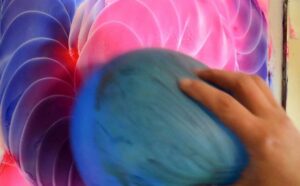 today capture millions of people in museums and galleries around the world.
In the modern world, drawing is not only a way to create beautiful images. It helps a person develop creative thinking, imagination, attention to detail, fine motor skills of the hands and even emotional intelligence. While drawing, the artist learns to notice the beauty of the world around them, analyze shapes, colors, light and shadows, and express their feelings and ideas through art. That is why drawing classes are useful not only for future artists, but also for every person, regardless of age.
For many centuries, artists have constantly improved the ways of creating images, experimented with materials and discovered new artistic techniques. So there were various drawing techniques-special methods of working with pencil, paints, pastels, charcoal, ink and other artistic materials. Each technique has its own unique features, tools, rules of execution and artistic capabilities. Some techniques allow you to create light and transparent paintings, others – bright and rich compositions, and some help to achieve extreme realism and detail.
Knowledge of various drawing techniques opens up wide opportunities for creativity for the artist. The more techniques a person Masters, the easier it is for them to find their own style, convey their mood, and create unique works of art. In this article, we will take a detailed look at the 15 most famous drawing techniques, learn about their features, advantages and applications, and understand why each of them occupies an important place in the world of Fine Arts. This information will be useful both for students who are just starting to get acquainted with art, and for anyone who wants to better understand the fascinating world of creativity and artistic expression.
Drawing technique # 1.pencil hatching (simple shading).
Pencil hatching is one of the very first techniques studied at school. It consists in creating volume using different pressure forces on the pencil and the direction of the lines. The stronger the pressure, the darker the image becomes. This allows you to convey the light, shadow, and shape of an object. For example, an Apple in a drawing may look bulky if one side is lighter and the other is darker.
Drawing technique # 2.hatching.
Hatching is a technique in which the artist uses parallel lines to create shadows. The distance between lines affects the darkness of the area: the closer the lines are to each other, the darker the area looks. This method is often used in graphics and illustrations.
Drawing technique # 3.cross-hatching.
This is a complex form of hatching, where lines overlap each other at different angles. This allows you to create deeper shadows and more realistic images. For example, to draw a thick shadow under a tree, the artist uses many layers of intersecting lines.
Drawing technique # 4. dot technique (dotted line, stippling).
In this technique, an image is created using many small dots. The more dots in a particular area, the darker it looks. This is a very painstaking job that requires patience, but allows you to get very detailed drawings.
Drawing technique # 5.watercolor.
Watercolor is one of the most popular and oldest painting techniques that uses special water-based paints. The name comes from the Latin word aqua, which means “water”. The main feature of watercolors is their transparency. When an artist applies paint to paper, light passes through a thin layer of paint and bounces off the white paper, making the drawing look light, airy and as if glowing from the inside. That is why watercolors are often used to create delicate landscapes, images of flowers, sky, clouds, reservoirs and other natural objects.
To work with watercolors, you need special thick paper, brushes and a set of paints. Plain printing paper is not suitable because it quickly gets wet, deforms, and tears. Watercolor paper has a special structure that absorbs water well and helps the paint to be evenly distributed over the surface.
One of the main advantages of watercolors is the ability to create smooth transitions between colors. If the artist adds more water, the color becomes lighter and more transparent. If there is less water, the color looks more saturated. Thanks to this, you can convey the atmosphere of morning fog, clear water or soft sunlight.
Among the most famous techniques of watercolor painting is drawing on dry paper and on wet paper. In the first case, the paint is applied on a dry surface, which allows you to create clear contours and details. In the second case, the paper is pre-moistened with water, after which the paints spread beautifully, forming soft color transitions and interesting artistic effects.
Working with watercolors requires care and planning. Unlike gouache or acrylic, it is quite difficult to correct mistakes here, since light colors are difficult to cover with dark layers. Therefore, the artist usually starts working with light shades and gradually moves on to darker ones.
Watercolors help to develop a sense of color, accuracy, patience and artistic thinking. That is why it is often studied in art schools and clubs as one of the basic techniques of painting.
Drawing technique #6.gouache.
Gouache is a painting technique that uses special water-soluble paints with high opacity. At first glance, gouache resembles watercolors, because it is also diluted with water and applied with a brush. However, there is a significant difference between them: gouache is an opaque paint. It contains additional whitewash, which makes the colors thicker, brighter and more saturated.
It is precisely because of its density that gouache allows the artist to overlap previous layers of paint. If a mistake in watercolors can ruin the work, then in gouache it can often be corrected by simply painting over the unsuccessful area with a new layer. This feature makes gouache very popular among beginners and schoolchildren.
Gouache paints have bright and rich colors. After drying, the surface becomes matte, without gloss. This allows you to take good photos or scan finished works, since the light is not reflected from the surface of the picture.
With the help of gouache, you can create both simple children’s drawings and complex artistic compositions. It is perfect for depicting nature, architecture, fairy-tale characters, decorative patterns and illustrations. Artists often use gouache to create posters, sketches, and educational works.
When working with gouache, it is important to control the amount of water. If there is too much water, the paint becomes too liquid and loses its density. If there is not enough water, the strokes may look uneven and rough. Experienced artists are able to find the right balance to get the desired result.
Gouache develops courage in creativity, as it allows you to experiment with colors and not be afraid of mistakes. That is why this technique is one of the most popular among children and beginners.
Drawing technique # 7. Oil Painting.
Oil Painting is considered one of the most prestigious and well-known techniques of Fine Art. It was with the help of oil paints that many masterpieces of world art were created, which are now kept in the most famous museums of the world. Oil paints consist of colored pigments and special vegetable oil, most often linseed oil.
The main feature of oil paints is their slow drying. If watercolors or acrylics can dry in a few minutes, then oil paint sometimes dries for several days or even weeks. This gives the artist plenty of time to correct, mix colors, and carefully work out the details.
Oil Painting allows you to create extremely realistic paintings. Thanks to smooth color transitions, you can accurately convey the volume of objects, the texture of fabric, the shine of metal, the transparency of glass or the glare of light on water. That is why oil paints are often used to paint portraits, landscapes, still lifes and historical paintings.
For work, usually use a canvas stretched on a wooden frame. Before starting drawing, it is covered with a special primer. Artists also use various brushes, palette knives, and solvents to create special effects.
One of the interesting techniques is to apply thick layers of paint, which is called impasto. In this case, the brushstrokes remain in relief and create a three-dimensional surface of the picture. Another method involves applying thin transparent layers of paint on top of each other, which allows you to reach the color depth.
Oil painting requires considerable patience, care and practice. However, the results often impress with their beauty, detail, and durability. Oil paintings can last for hundreds of years.
Drawing technique # 8. acrylic paints.
Acrylic paints are one of the most modern art materials. They appeared in the XX century and quickly became popular among artists around the world. Acrylic combines many of the advantages of watercolors and oil paintings, which makes it a universal tool for creativity.
The basis of acrylic paints is a special synthetic resin and colored pigments. As long as the paint is wet, it can be diluted with water, similar to watercolors. After drying, it becomes water-resistant and is no longer washed off with water.
One of the main advantages of acrylic is fast drying. This allows the artist to quickly apply new layers of paint and continue working without waiting for a long time. This feature is especially useful for contemporary artists, designers, and illustrators.
Acrylic paints are characterized by bright colors and high resistance to light. Paintings do not lose their saturation for a long time and do not fade in the sun. In addition, acrylic can be used not only on canvas or paper, but also on wood, cardboard, fabric, plastic, stone and many other surfaces.
With the help of acrylic, the artist can work in different styles. If you add more water, the paint will resemble watercolors. If you use a thick paint without dilution, the result will be similar to oil painting. This opens up huge opportunities for creative experiments.
Acrylic is often used to create modern paintings, decorative panels, wall paintings, design projects and decoration of various objects. Due to its versatility, it has become one of the most beloved materials of artists of the XXI century.
Drawing technique # 9. pastels.
Pastel is a special artistic technique that combines the features of drawing and painting. Special colored sticks similar to chalk are used for work. They consist of a colored pigment and a small amount of binders. Thanks to this, pastels leave soft, velvety traces with a rich color on the paper.
There are several types of pastels: dry, oil and wax. The most popular is dry pastels, which are easy to apply on paper and well shaded. Oil pastels contain more fat, so the colors look brighter and richer. Wax pastels are characterized by durability and are often used by children.
One of the main advantages of pastels is the ability to smoothly mix colors without using brushes. The artist can blend colors with his fingers, cotton swabs, or special paper tools. This creates very soft transitions between shades.
Pastels are great for creating portraits, as they allow you to convey delicate skin tones and smooth shadows. It is also often used for drawing landscapes, flowers, animals, and natural phenomena. The sky, clouds, fog or sunset look especially beautiful in pastel techniques.
For work, a special rough paper is usually used, which holds pastel particles well. Finished works are often covered with a special fixative – fixative to protect the drawing from shedding.
Pastel technique is valued for its softness, tenderness and ability to convey emotions through color. It helps the artist work quickly, freely and creatively, creating paintings that impress with their lightness and beauty.
Drawing technique #10.charcoal drawing.
Charcoal gives very rich black shades. This technique allows you to quickly create high-contrast and expressive images. It is often used for sketches and training works.
Drawing technique # 11.drawing with Ink (Inc).
Ink is used to create clear, contrasting drawings. It is applied with a brush or pen. This technique is very popular in comics, manga, and illustrations.
Drawing technique #12. digital drawing.
This is a modern technology that uses tablets and computer programs. The artist draws with a stylus, creating digital paintings. The advantage of this technique is the ability to easily correct errors and experiment with colors.
Drawing technique #13.collage.
Collage is a technique in which an image is created from different materials: paper, fabric, photos. This is a very creative art form that allows you to combine different styles and textures.
Drawing technique # 14. dry brush.
This technique uses an almost dry brush with a minimum amount of paint. This allows you to create textures that look like vintage or rustling surfaces.
Drawing technique #15. airbrushing.
Airbrushing is a technique of spraying paint using a special tool – an airbrush. It allows you to create very smooth color transitions and realistic effects, for example, in advertising or on cars.
Why is it important to learn different drawing techniques?
Learning various techniques helps develop artistic thinking, imagination, and mindfulness. Each technique teaches you to see the world in a new way: hatching develops patience, watercolors – a sense of color, and digital drawing – modern skills. The more techniques a student knows, the easier it is for them to find their own style.
Interesting questions and answers about drawing techniques:
Question 1: What is the best technique for beginners to learn?
Answer: it is best to start with pencil hatching, because it helps to understand shape, light and shadow without complex materials.
Question 2: Is it possible to combine different techniques?
Answer: Yes, and it’s even recommended. For example, you can combine watercolor and pencil, or collage and paint. This is called mixed technique.
Question 3: What is the most difficult technique?
Answer: for many people, oil painting and spot techniques are difficult, because they require a lot of time and patience.
Question 4: Is it necessary to have expensive materials?
Answer: no, simple pencils, paper and basic paints are enough for training. The main thing is practice, not the cost of materials.
Question 5: Can everyone learn to draw?
Answer: yes, everyone can learn to draw. This is a skill that develops with practice, just like sports or music.
Drawing techniques are a huge world of creative opportunities. Each of them opens up new ways to convey the emotions, shape and beauty of the world around them. If you try different methods, you can not only learn how to draw, but also find your own style that will be unique. Drawing is a journey that has no boundaries, and each drawing makes this journey more interesting.
Drawing with balls in AISU
In the modern world, creativity is increasingly combined with experiments, new technologies and non-standard approaches to learning. At AISU school, we are convinced that real discoveries are born where there is room for curiosity, bold ideas and a desire to try something new. That is why our students not only learn theoretical knowledge in technology classes, but also constantly explore new ways of creative expression.
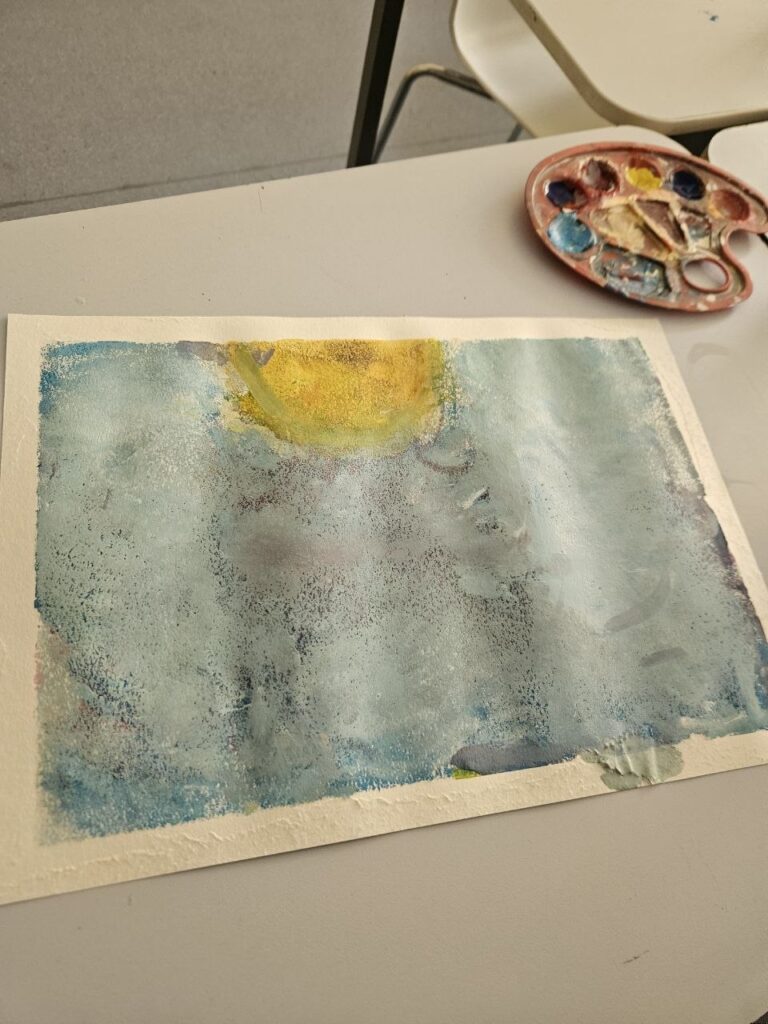
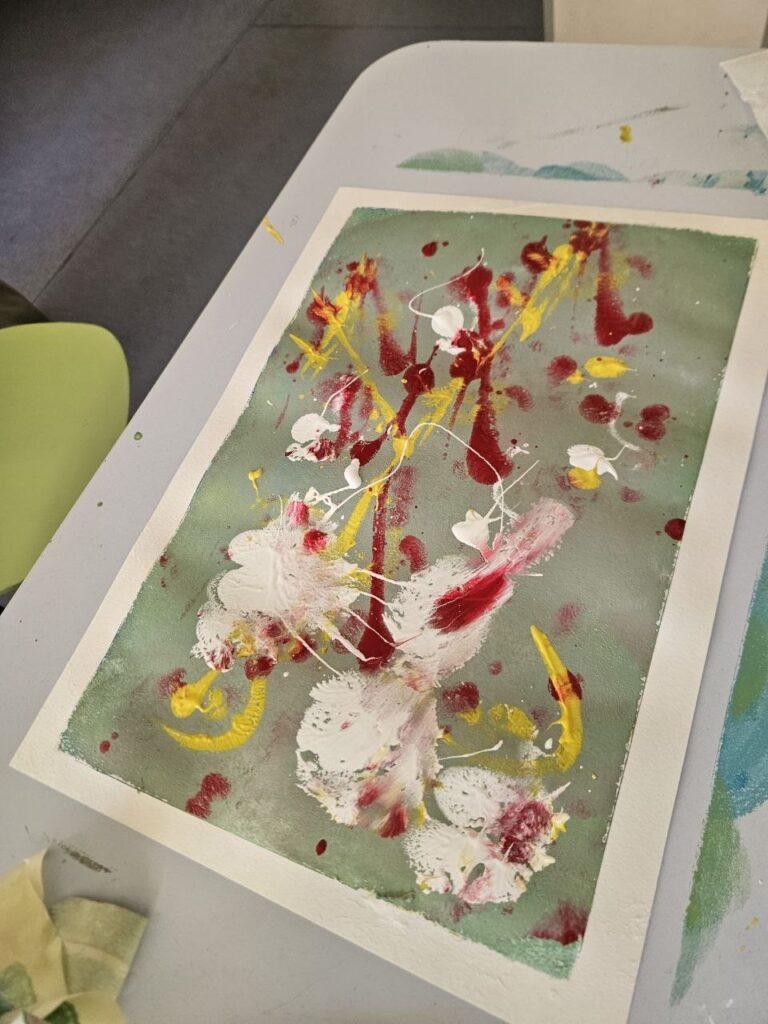
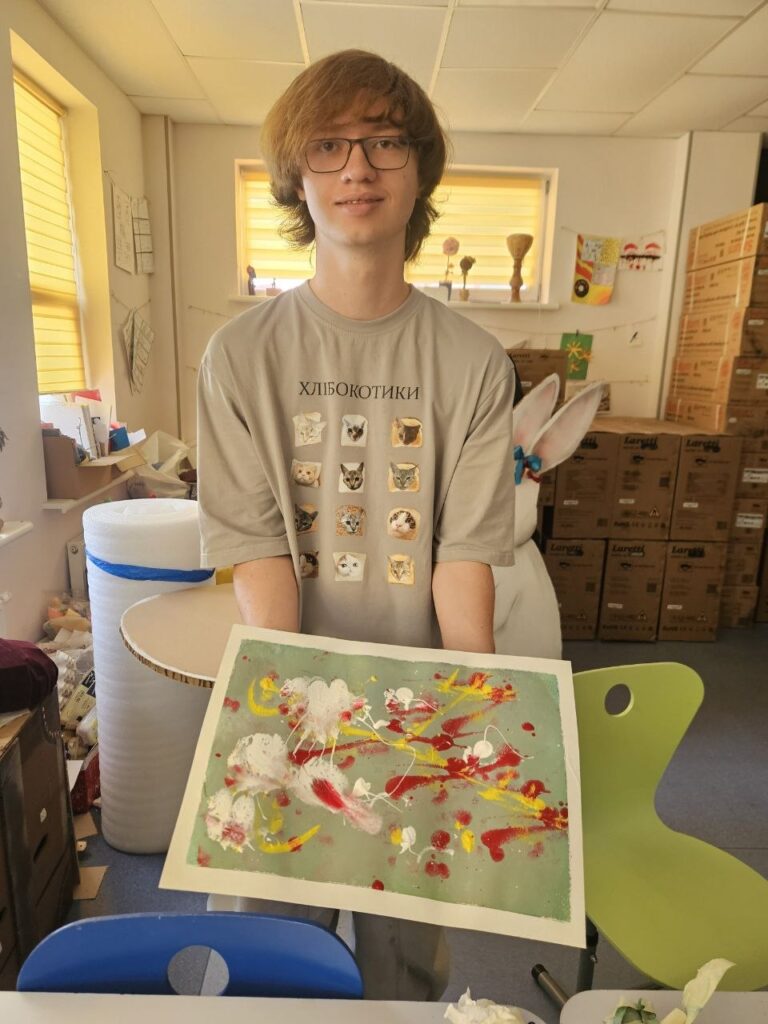
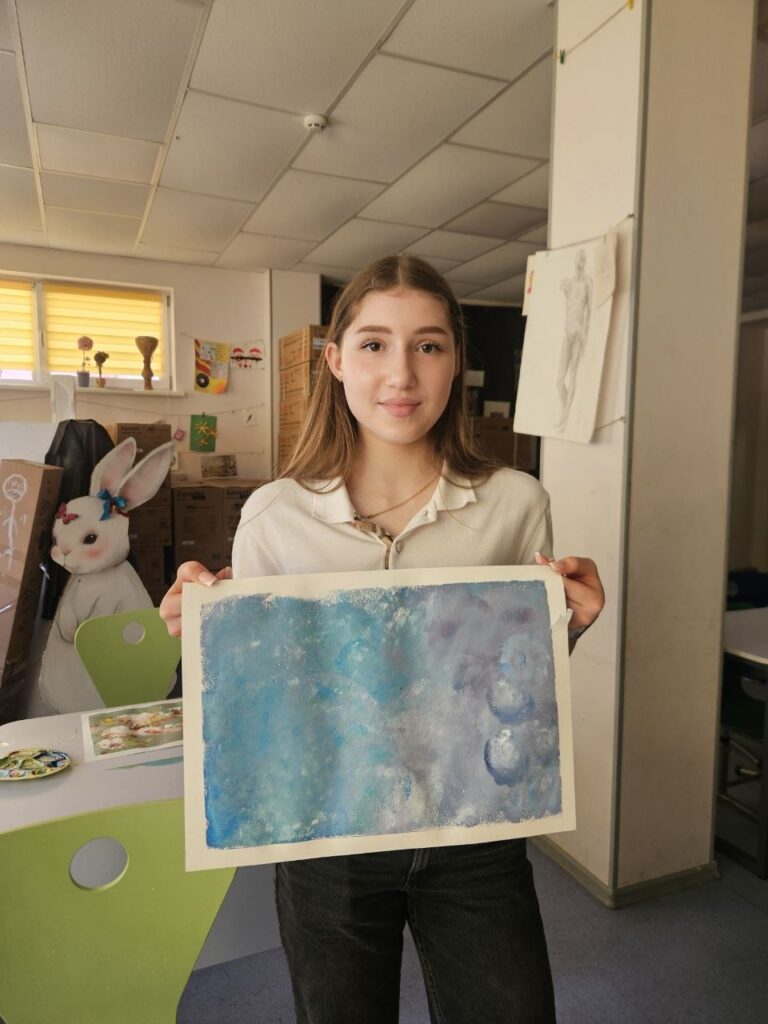
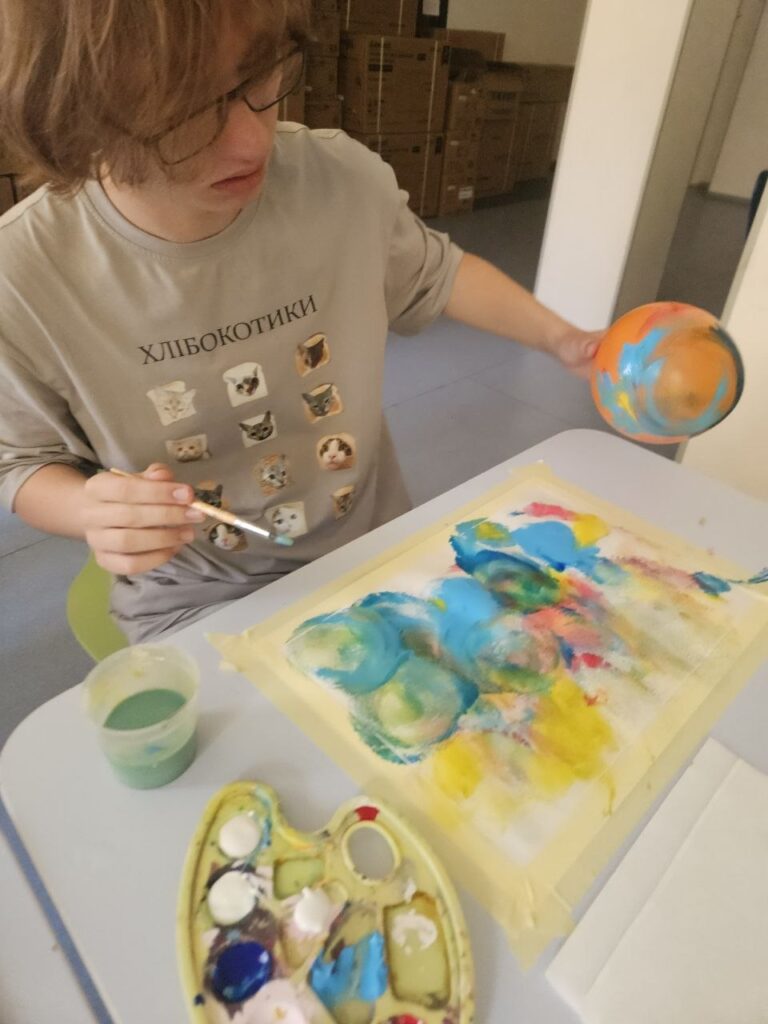
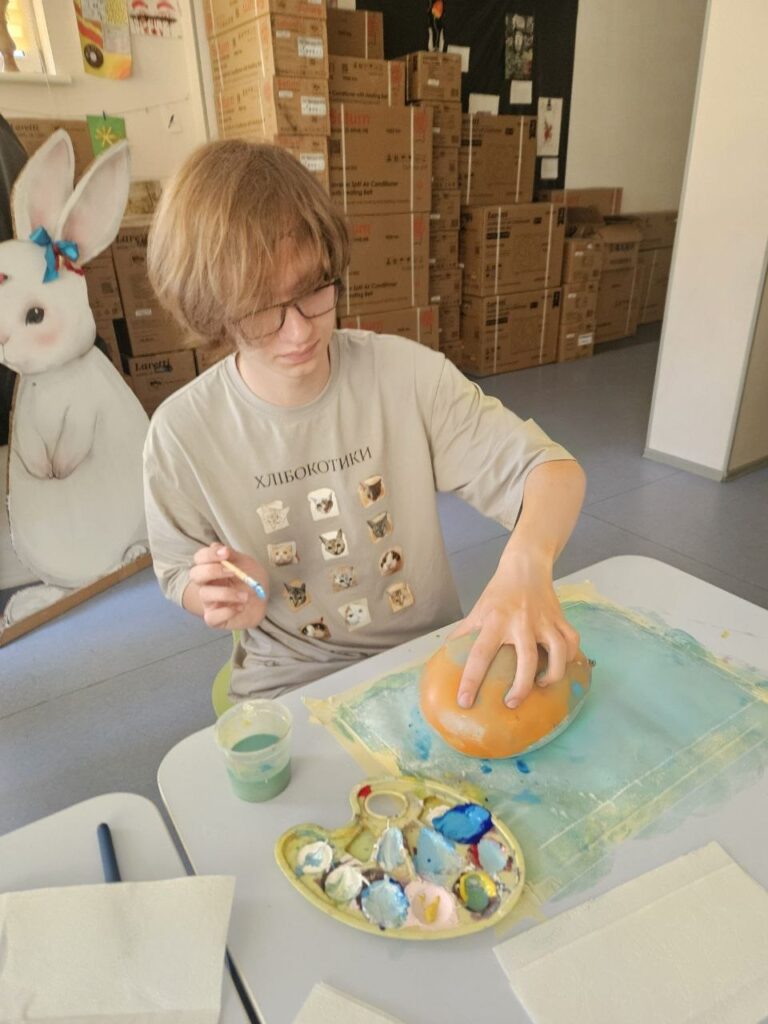
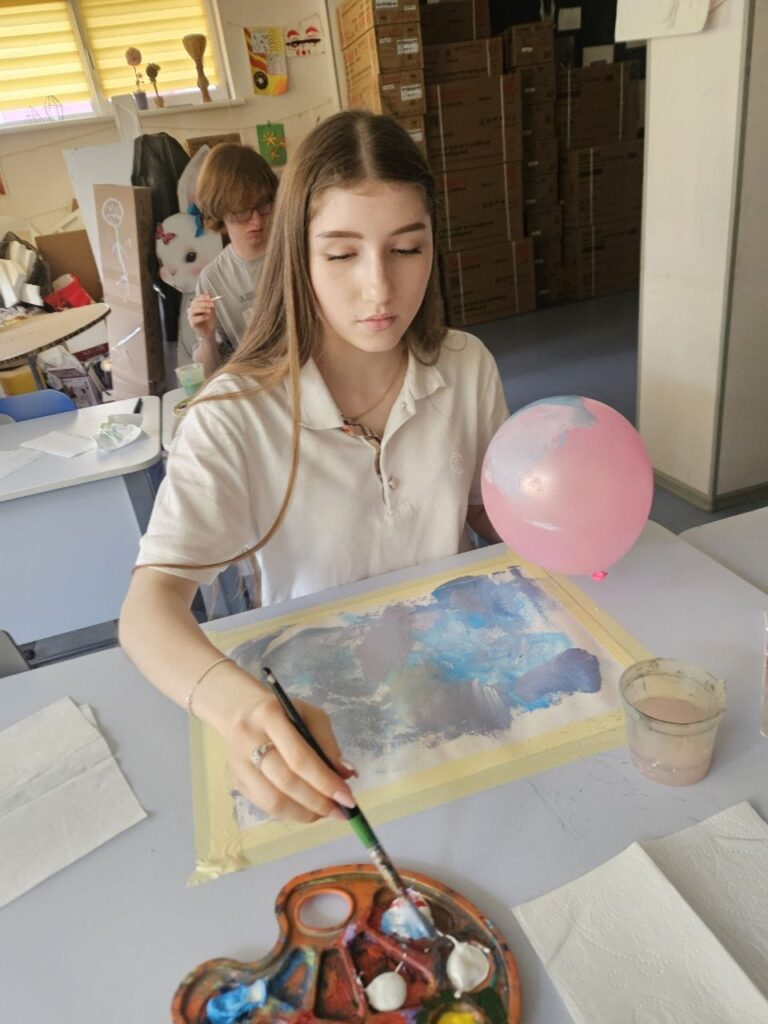
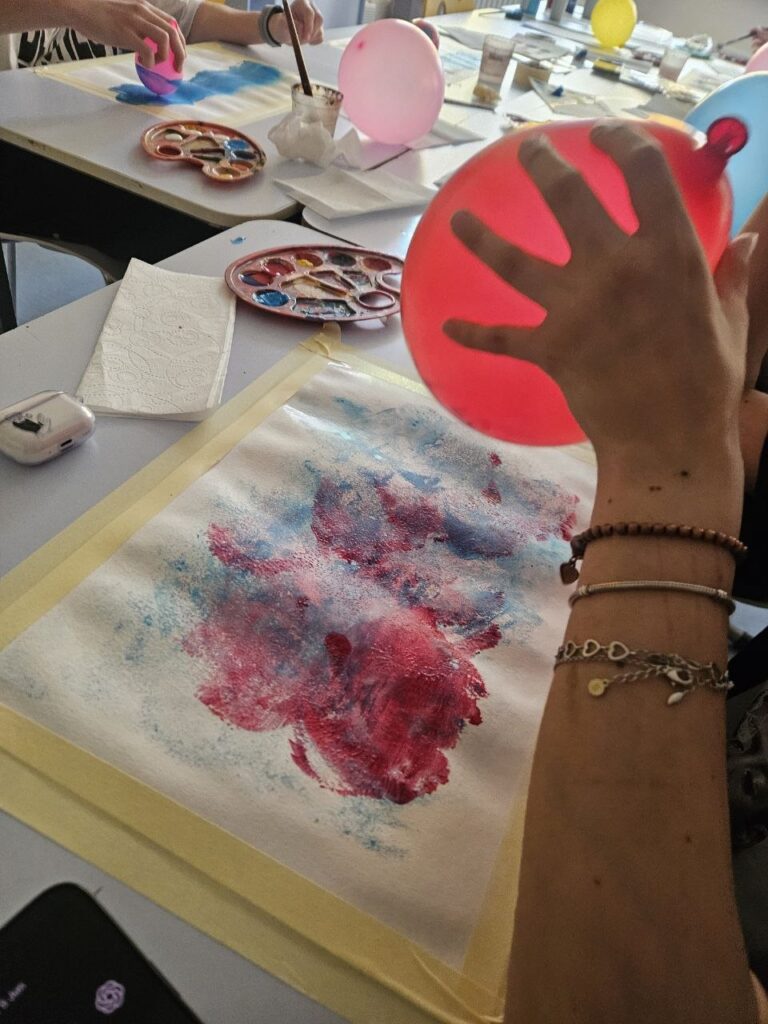
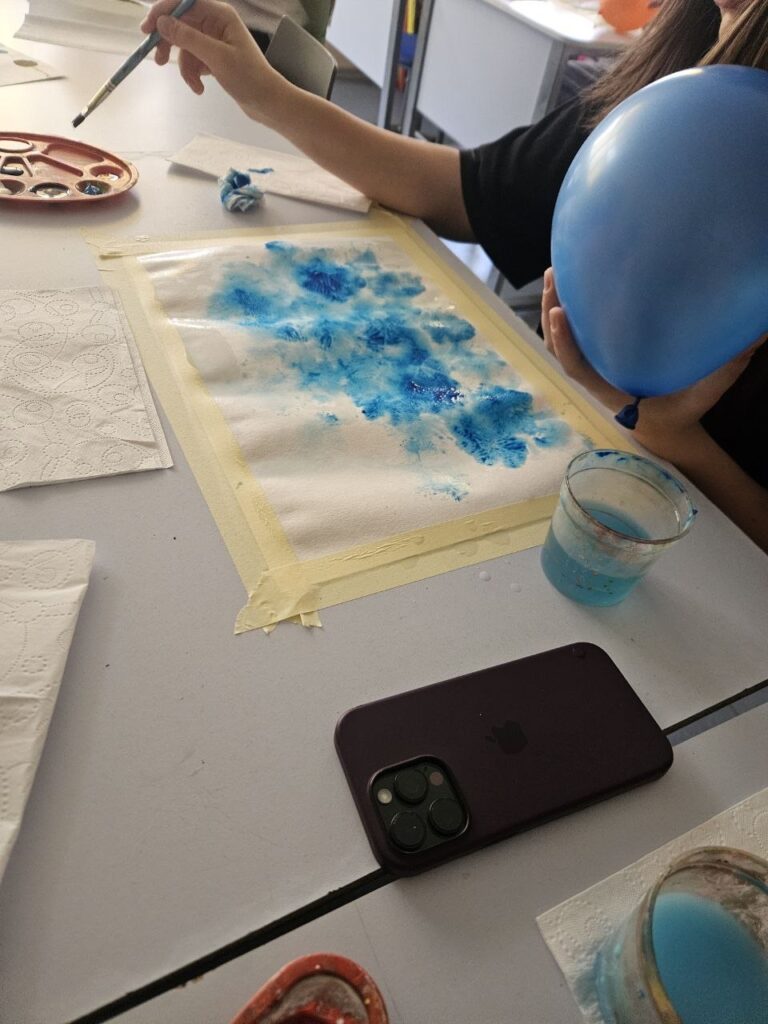
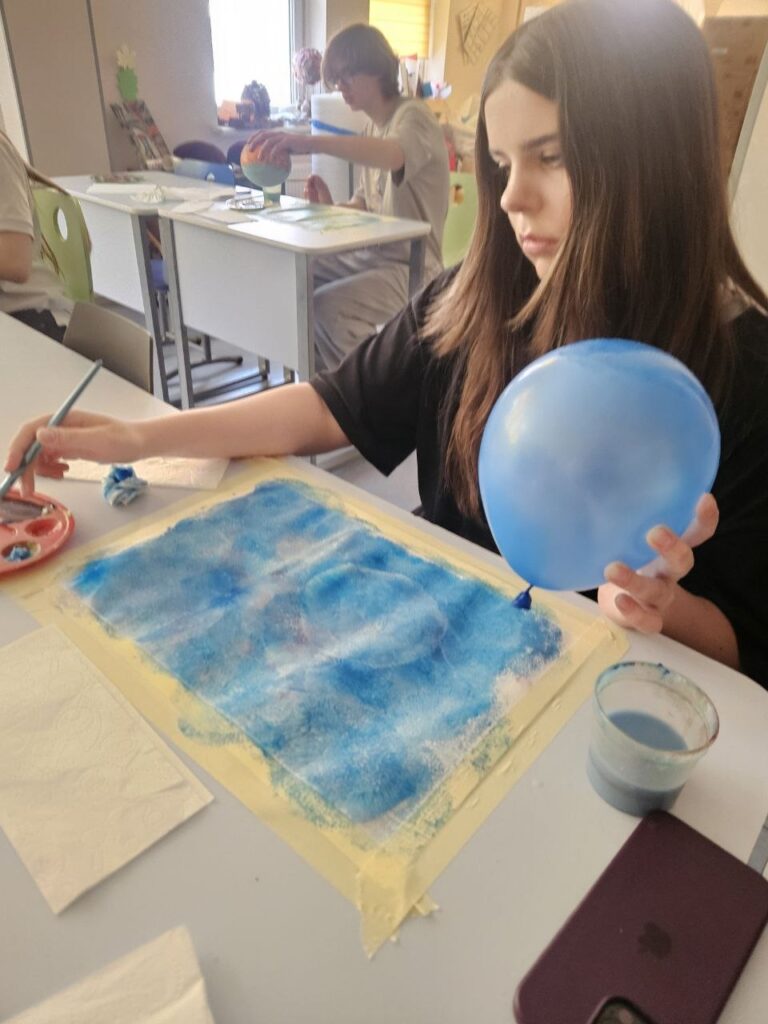
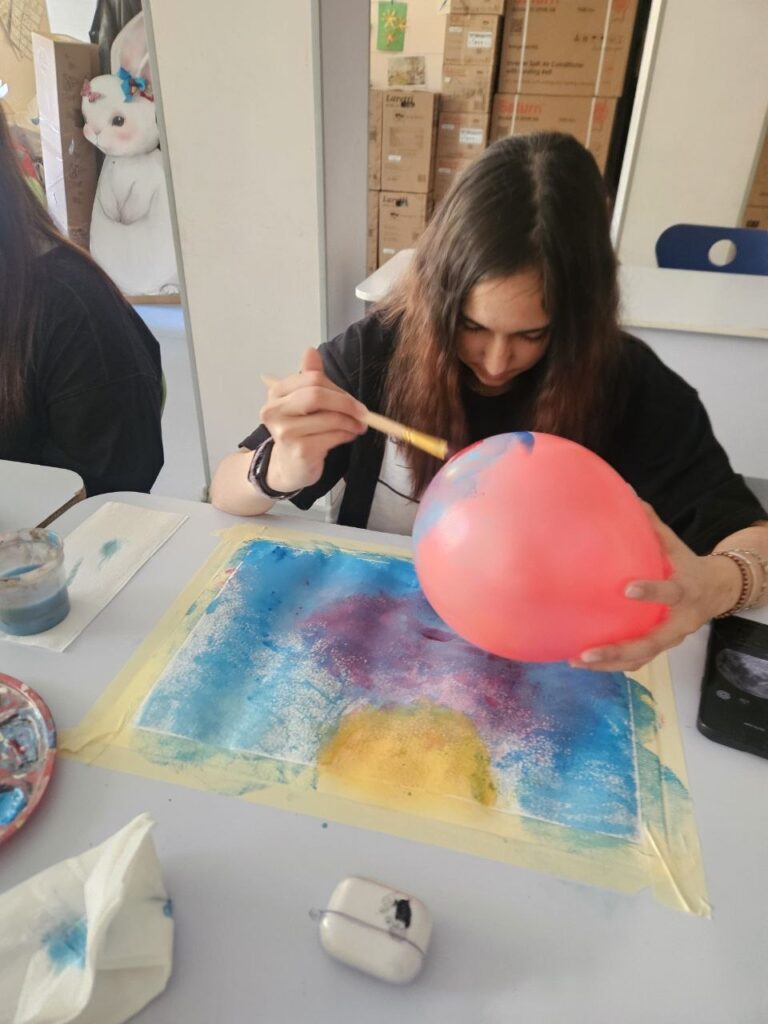
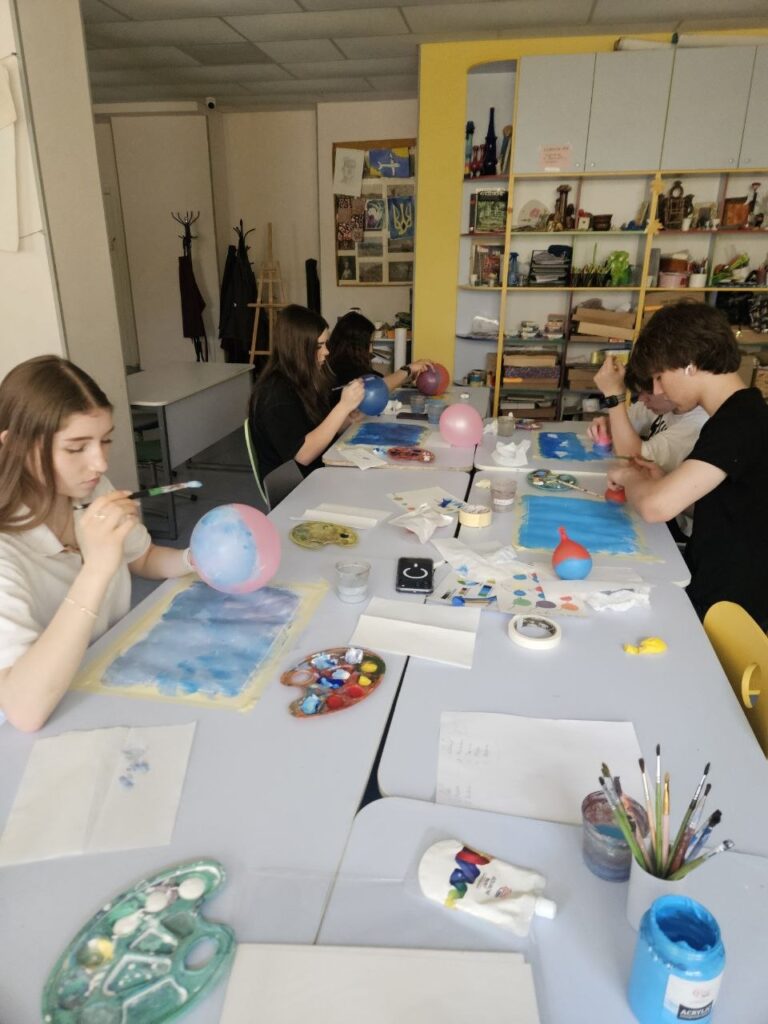
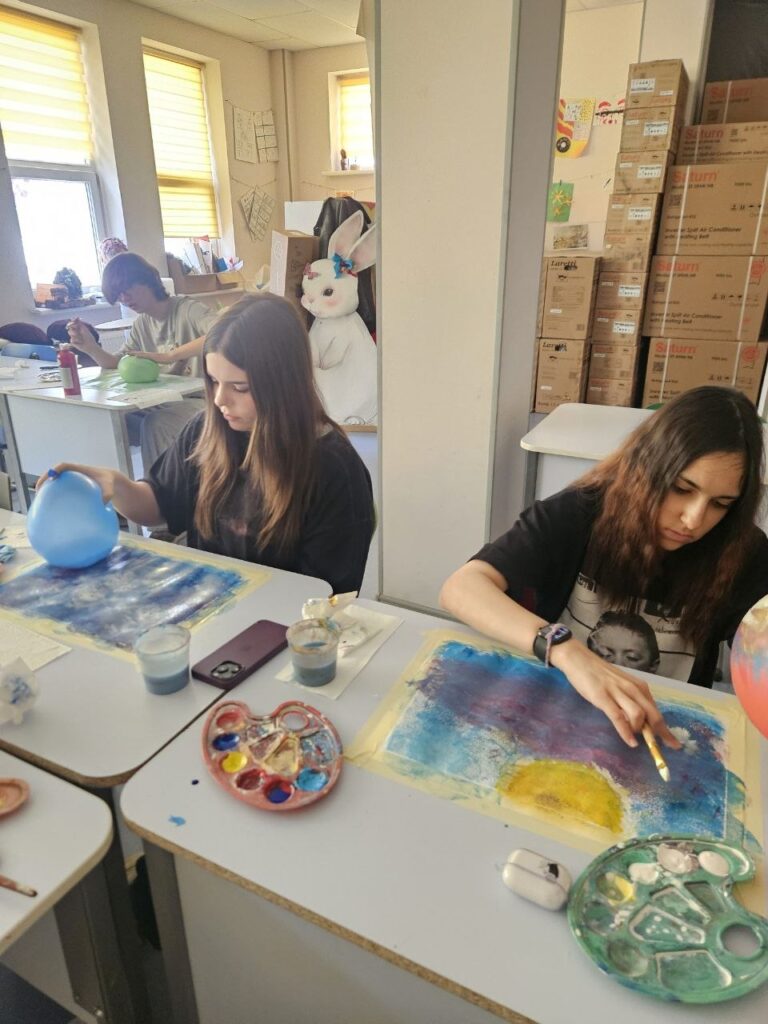
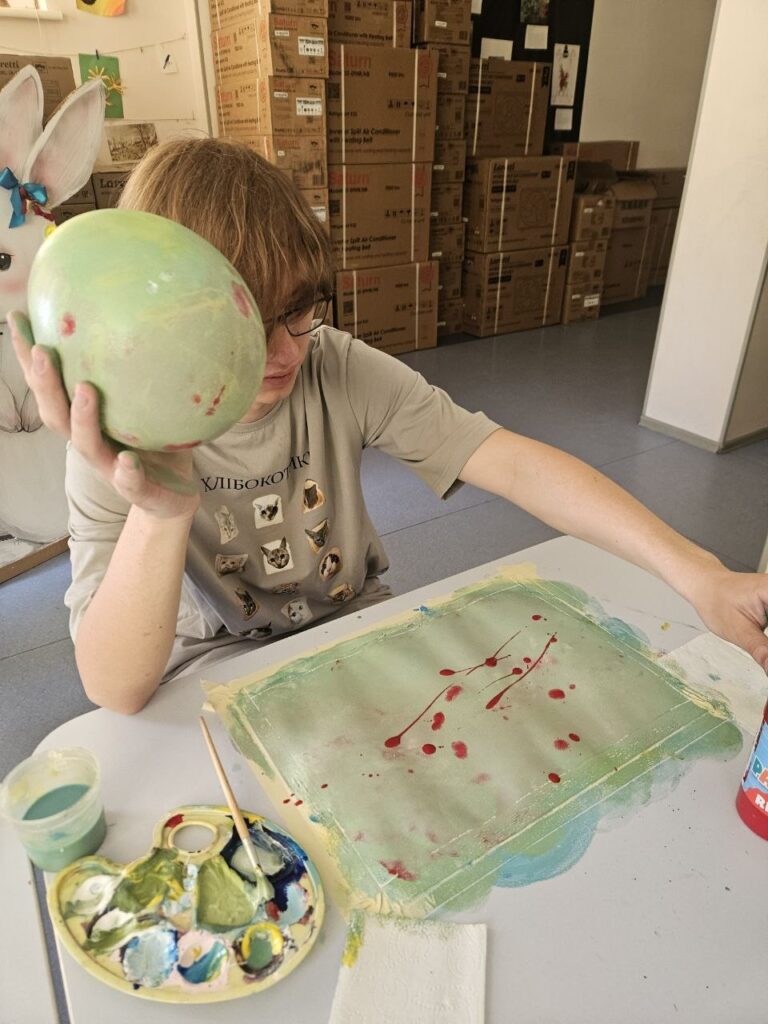
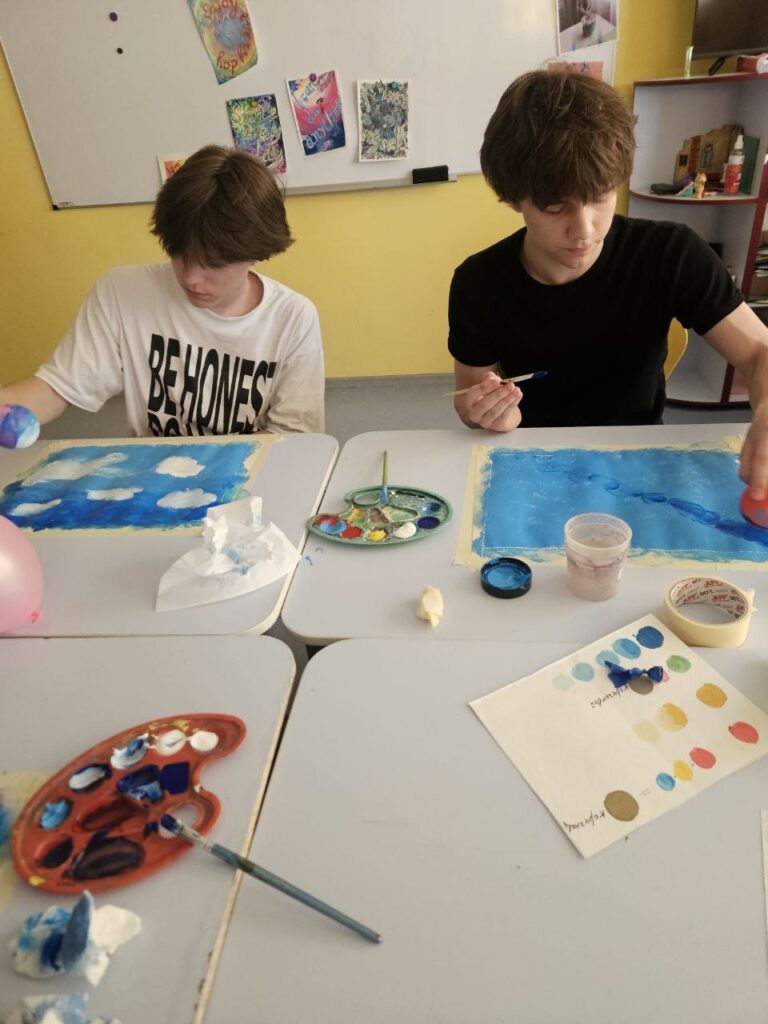
This time, students of grades 9A and 9C participated in an exciting creative experiment, which resulted in the birth of a new creative way to create artistic works – drawing with balloons. This unusual technique combines elements of art, motion physics, technological thinking and boundless children’s imagination. The most interesting thing is that students did not need traditional brushes to create bright paintings. The main tools of creativity were colored paints, balls and the desire to experiment.
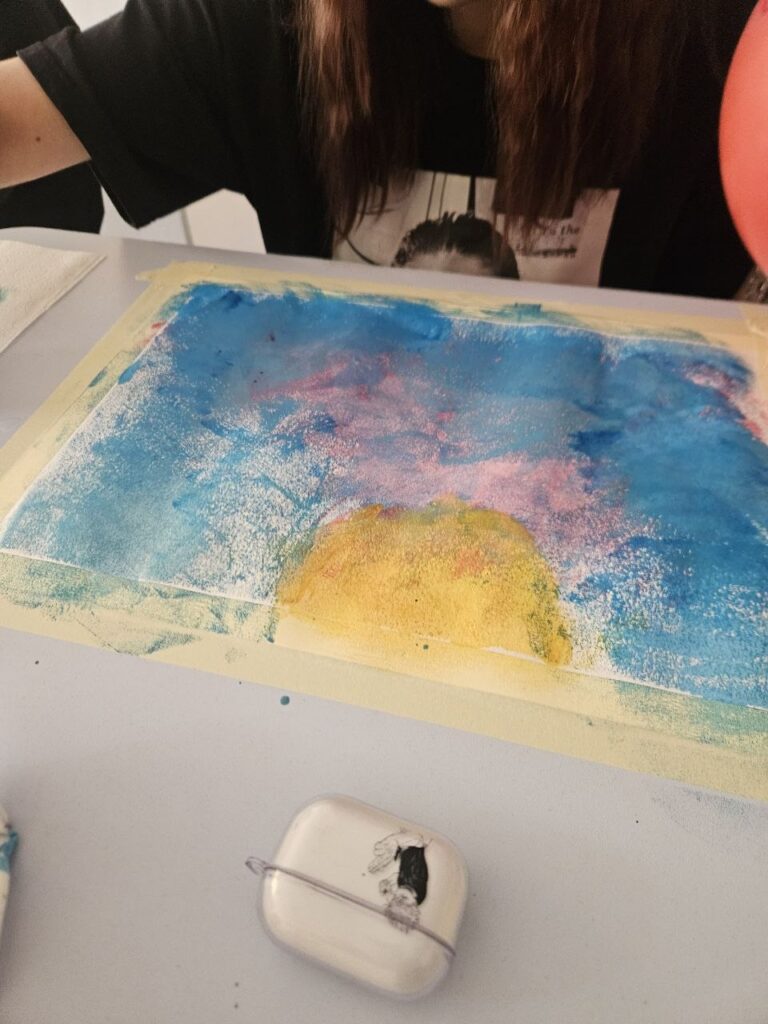
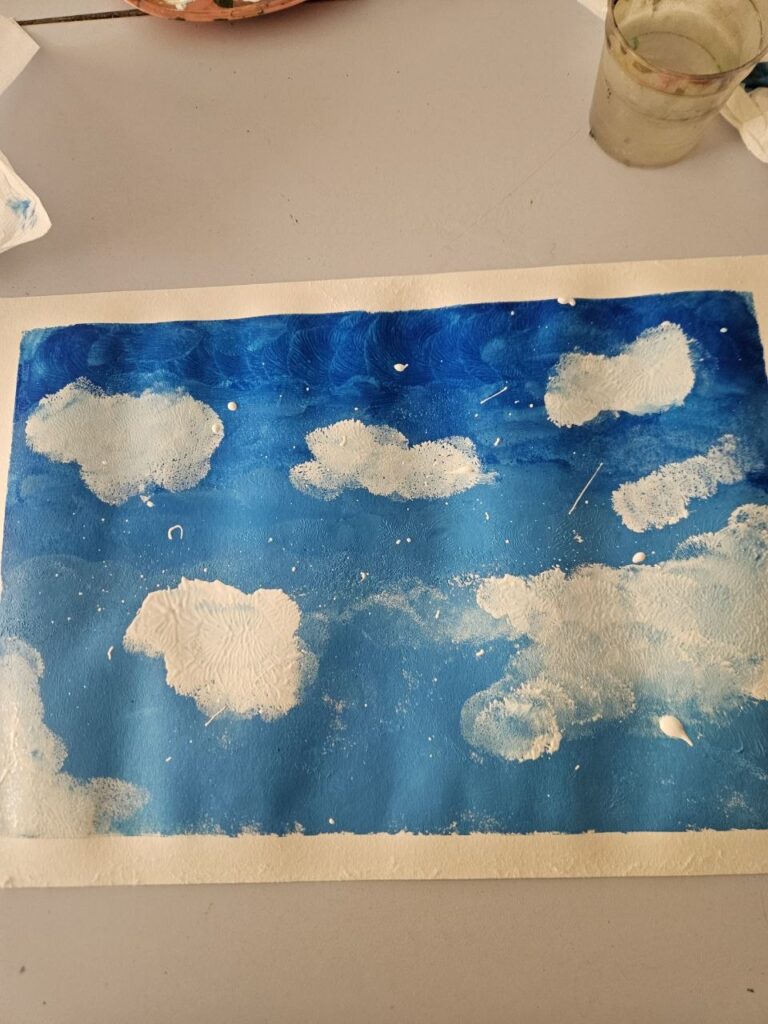
Ball drawing is a process in which paint is applied to the surface of paper by moving the balls. Each movement creates unique lines, patterns, and color transitions. The student cannot fully predict the final result, because the ball moves in its own way, leaving interesting traces behind it. That is why each work turns out to be unique and different from others.
During the lesson, students had the opportunity to feel not only artists, but also real researchers. They experimented with different colors, directions of movement, the speed of movement of the balls and the amount of paint. Each new experiment opened up new possibilities for creating artistic effects. Sometimes random movement turned into a beautiful wave, sometimes the paint created patterns similar to clouds, cosmic galaxies or mysterious natural phenomena.
A special feature of this technique was that it allowed us to combine logic and creativity. Students had to think through the work process, choose colors and understand exactly how the movement of the ball will affect the future drawing. At the same time, a significant part of the result depended on creative experimentation and unexpected artistic effects. This is the true value of this type of activity – learning through research and discovery.
The results exceeded all expectations. Amazing cloudy skies, fantastic landscapes, abstract compositions and bright color paintings filled with emotions began to appear on the sheets of paper. Some of the works resembled sunsets over the ocean, others – cosmic expanses or magical worlds from fantasy stories. Each student saw something special in his drawing and gave it its own meaning.
The atmosphere of the lesson was of particular importance. The class was filled with interest, enthusiasm, and a desire to create. Students actively discussed their ideas, shared their observations, and inspired each other to make new creative decisions. Such interaction helped to develop not only artistic skills, but also the ability to work in a team, express their own opinions and support creative initiatives of classmates.
At AISU school, we believe that modern education should go beyond the usual patterns. Today, technology isn’t just about computers, gadgets, or complex mechanisms. Technology is also the ability to find new ways to solve problems, generate original ideas, and look at familiar things from a different angle. It is these skills that become extremely important for the successful future of our students.
Drawing with balloons has become a great example of how creativity can be born out of simple things. An ordinary balloon turned into an artist’s tool, and an ordinary technology lesson turned into a real creative laboratory. The students saw that art is not limited to traditional rules and materials. To create something beautiful, sometimes a bold idea and a desire to experiment are enough.
Such classes help to develop creative thinking, imagination, ingenuity and self-confidence. When a child sees the result of their creative work, they begin to trust their abilities more and are not afraid to look for new solutions. It is through such projects that the ability to think outside the box is formed, which is extremely important in the modern world.
We are proud that students of AISU grades 9A and 9C have become the authors of such an interesting creative experiment. Their work once again proved that innovation is born not only in scientific laboratories, but also in school classrooms, where there is inspiration, curiosity and the desire to discover new things. Each created drawing has become not just an artistic work, but a real evidence that creativity has no limits.
Drawing with balloons once again showed that when technology and imagination are combined, a new generation of art is born. At AISU school, we continue to create a space where every child can explore, experiment, invent and implement their wildest ideas. After all, this is how future inventors, artists, researchers and leaders are formed who will be able to change the world around them.
And who knows, perhaps this creative experiment with balloons will be the beginning of a new AISU artistic tradition that will inspire future generations of students to create their own unique masterpieces.
Kiev, Dragomanova 1-v, AISU
Khodosovka village, Feodosia Pechersky STR., 55


