
✅ China ✅ Chinese traditions ✅ Chinese culture
China. Studying China together with AISU and fifth grade
China is one of the oldest and most mysterious countries in the world. It was China that gave humanity many inventions that Changed History: paper, Compass, printing and gunpowder. Today, China is one of the most influential countries in the world, combining thousands of years of tradition with the most modern technologies. That is why getting to know China has become an extremely interesting and exciting  topic for AISU fifth grade students.
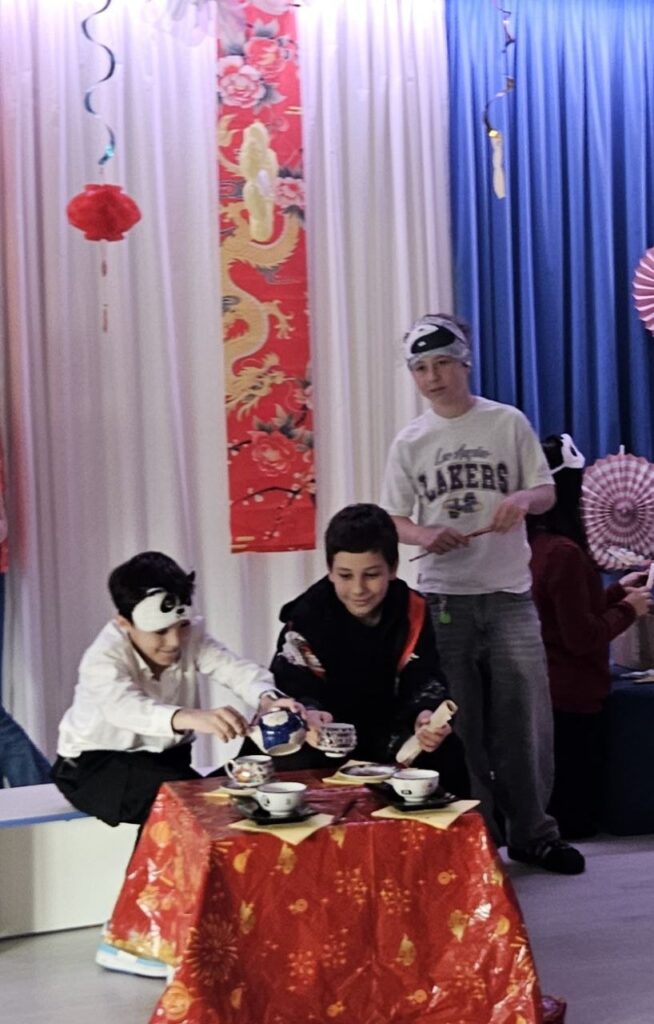
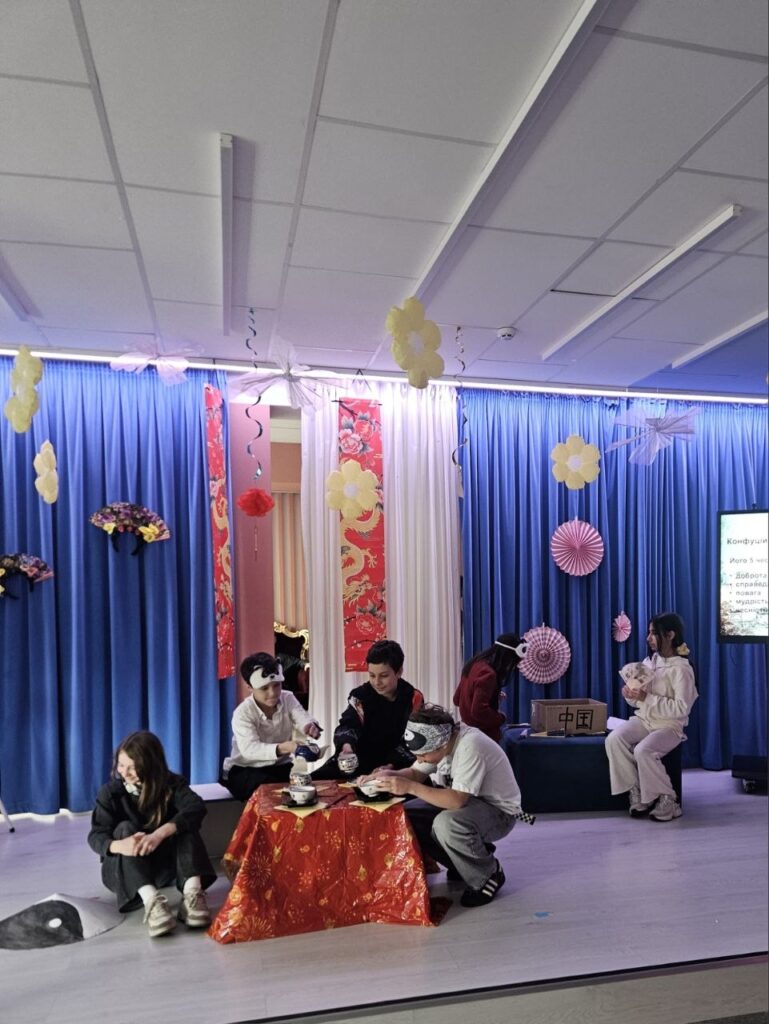
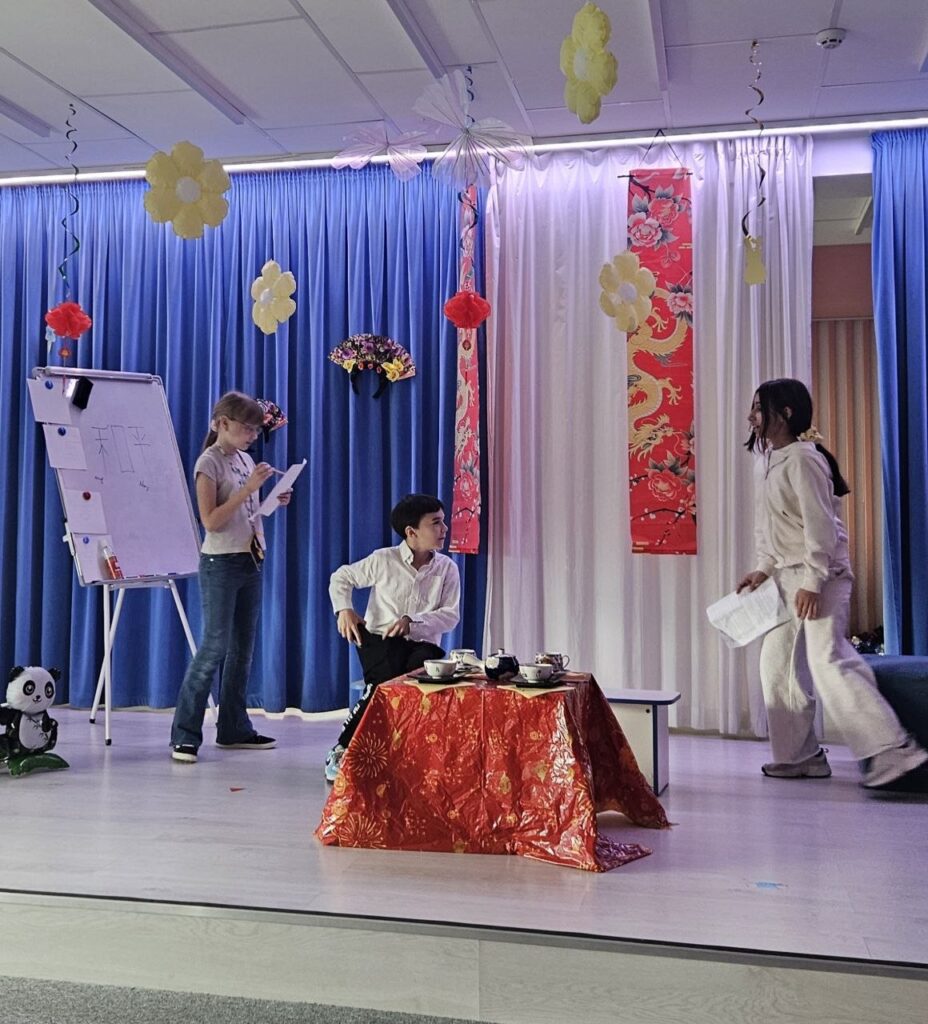
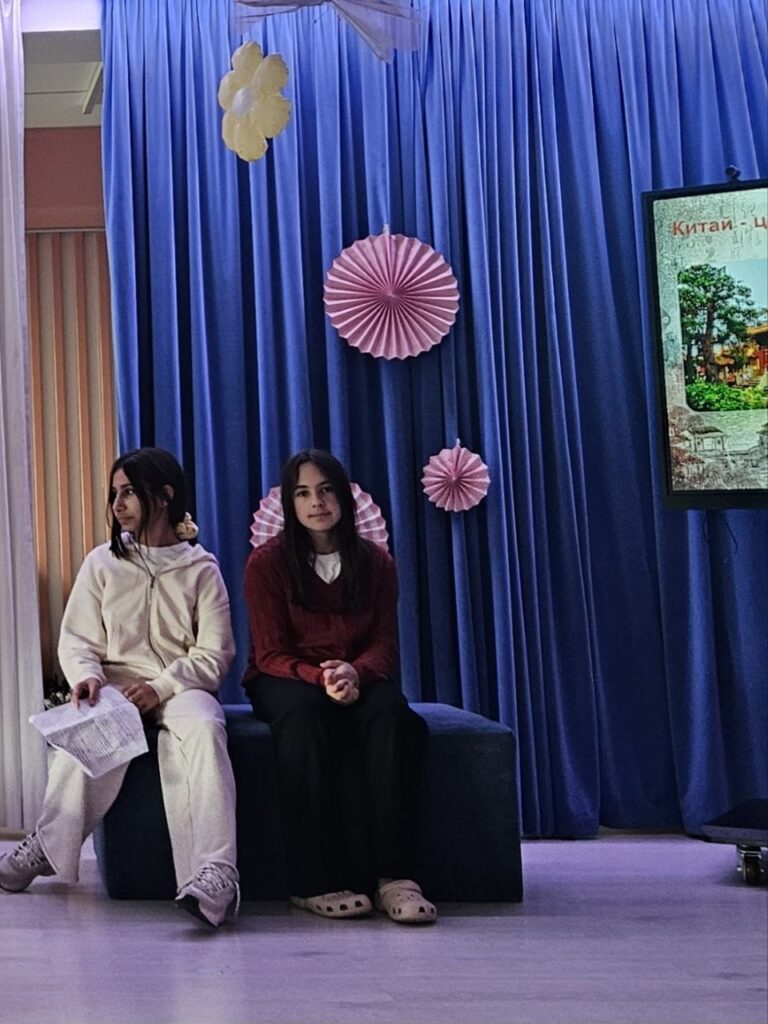
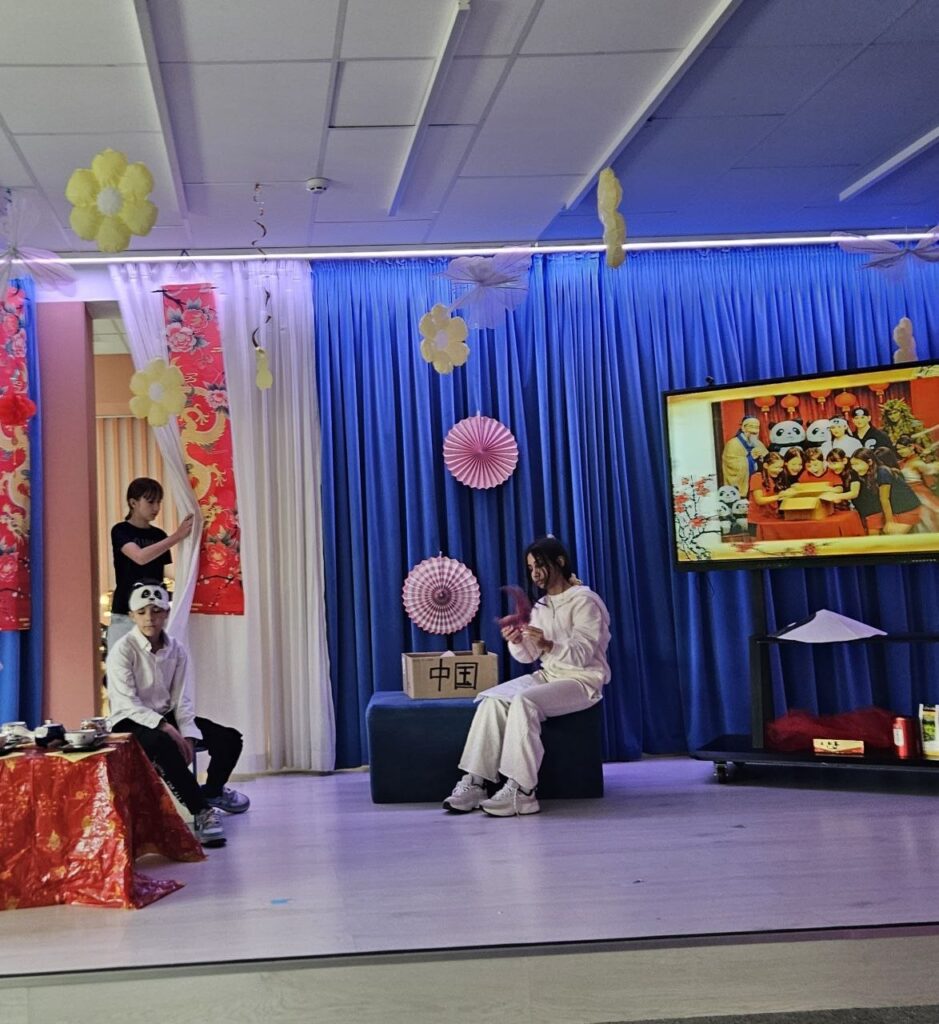
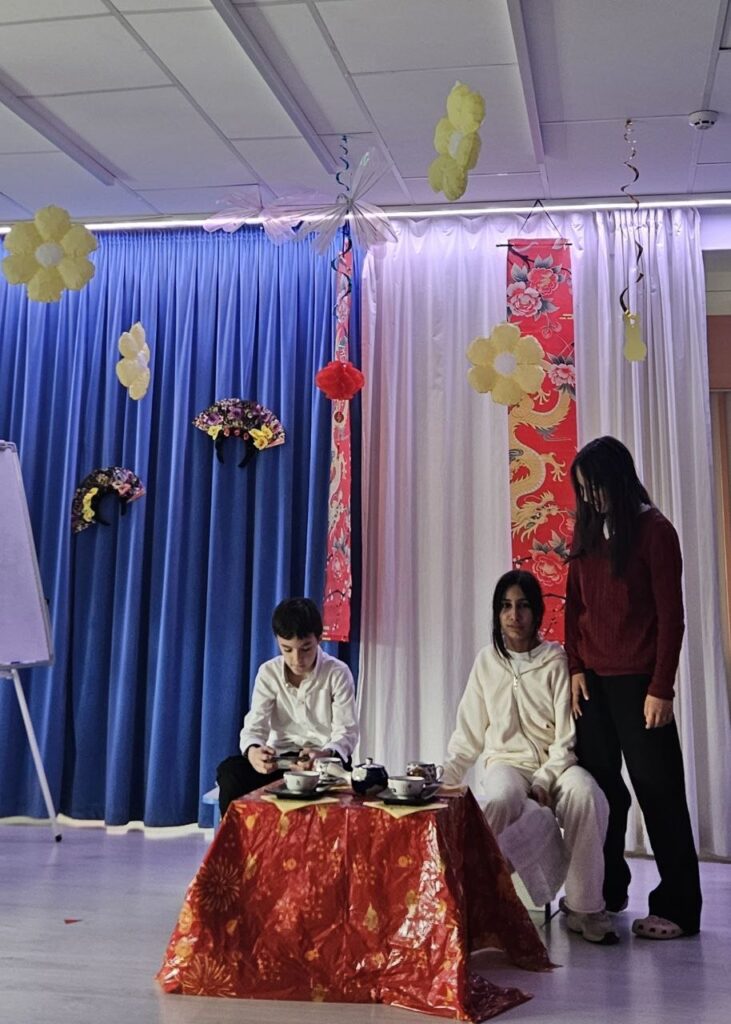
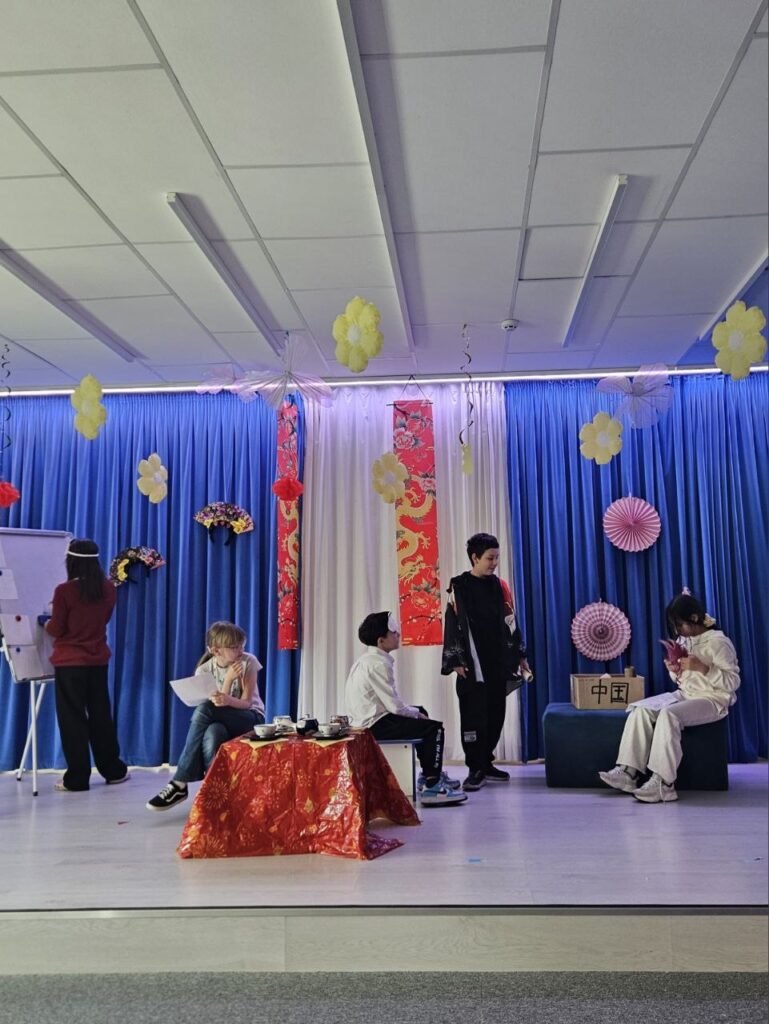
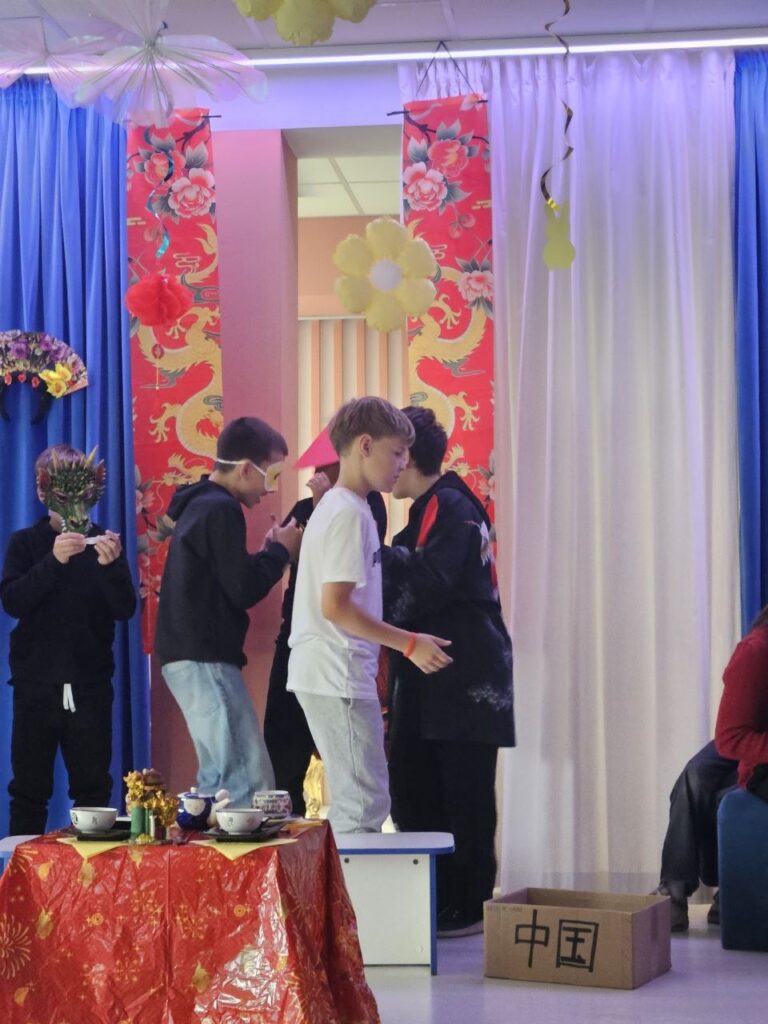
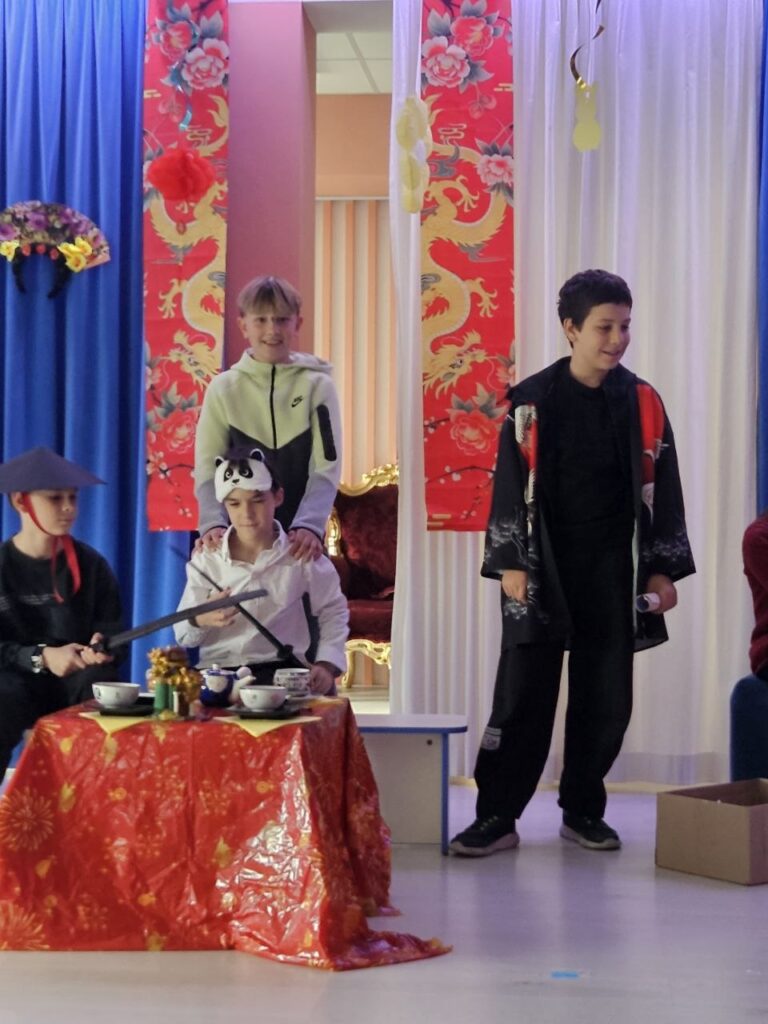
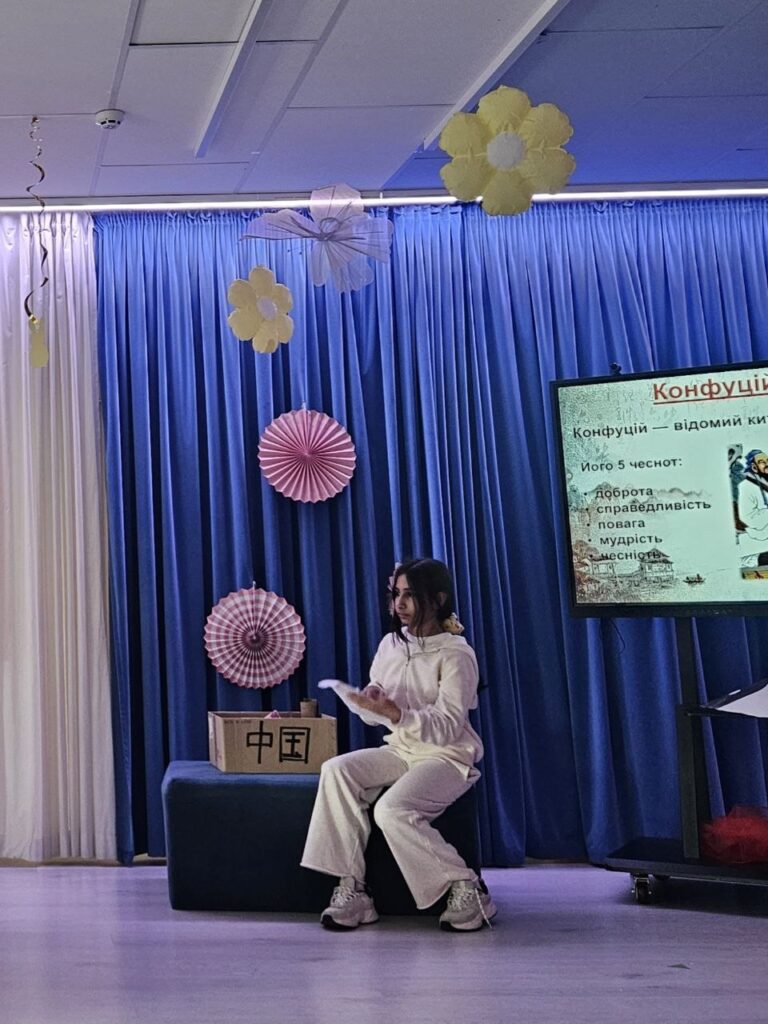
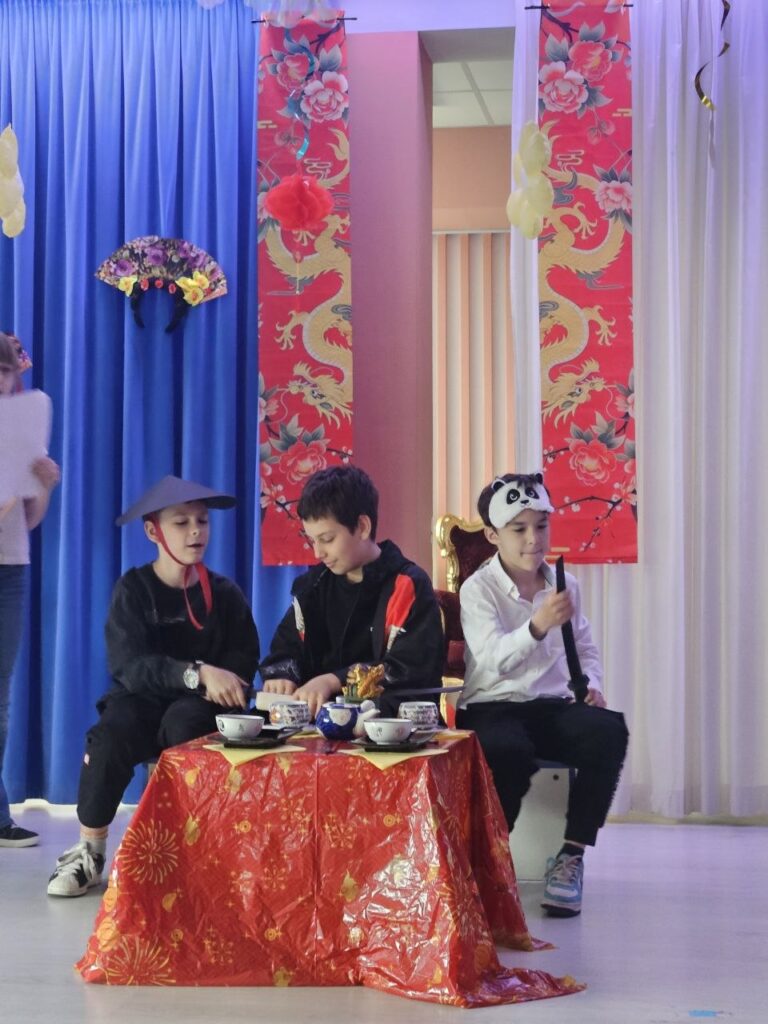
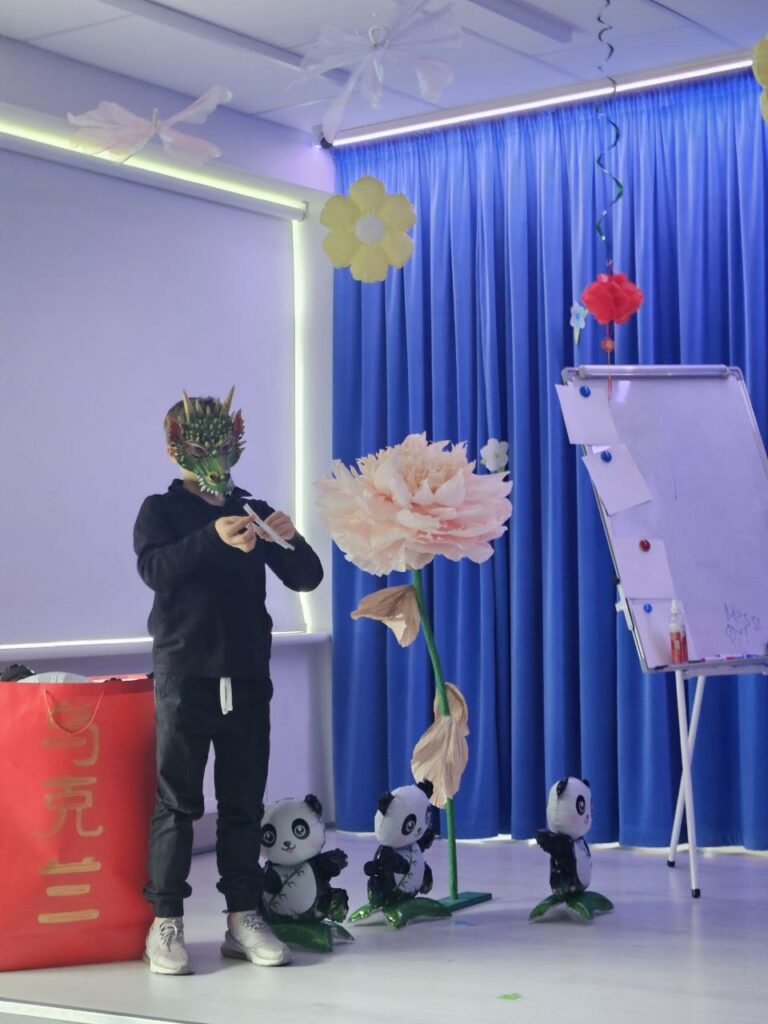
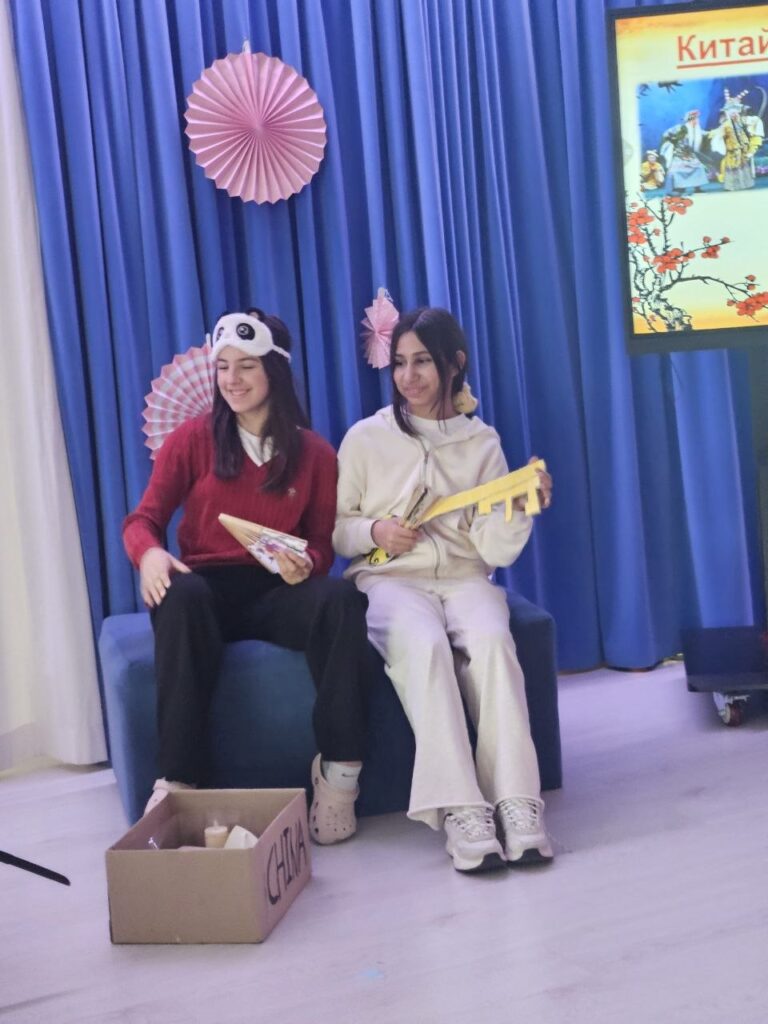
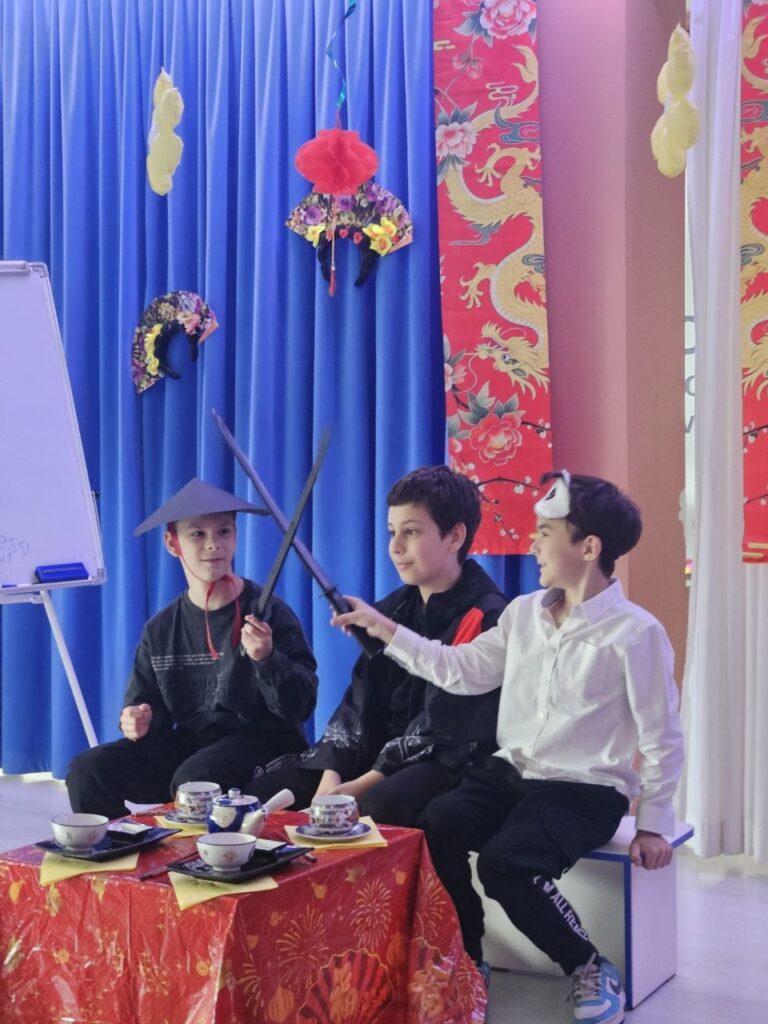
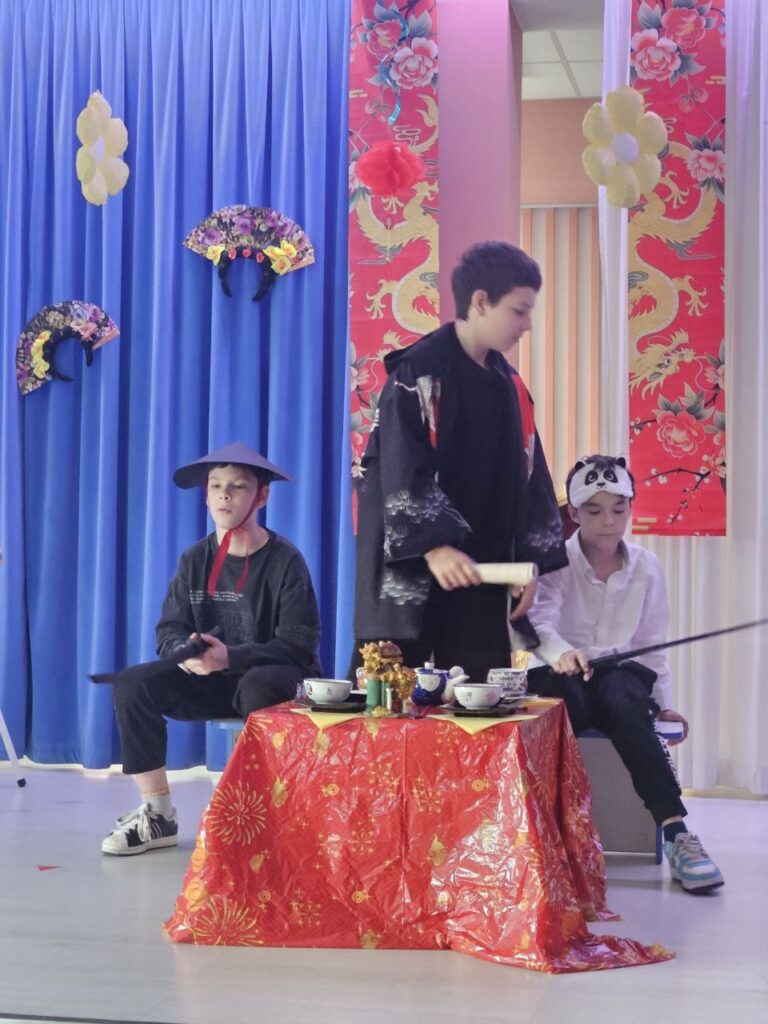
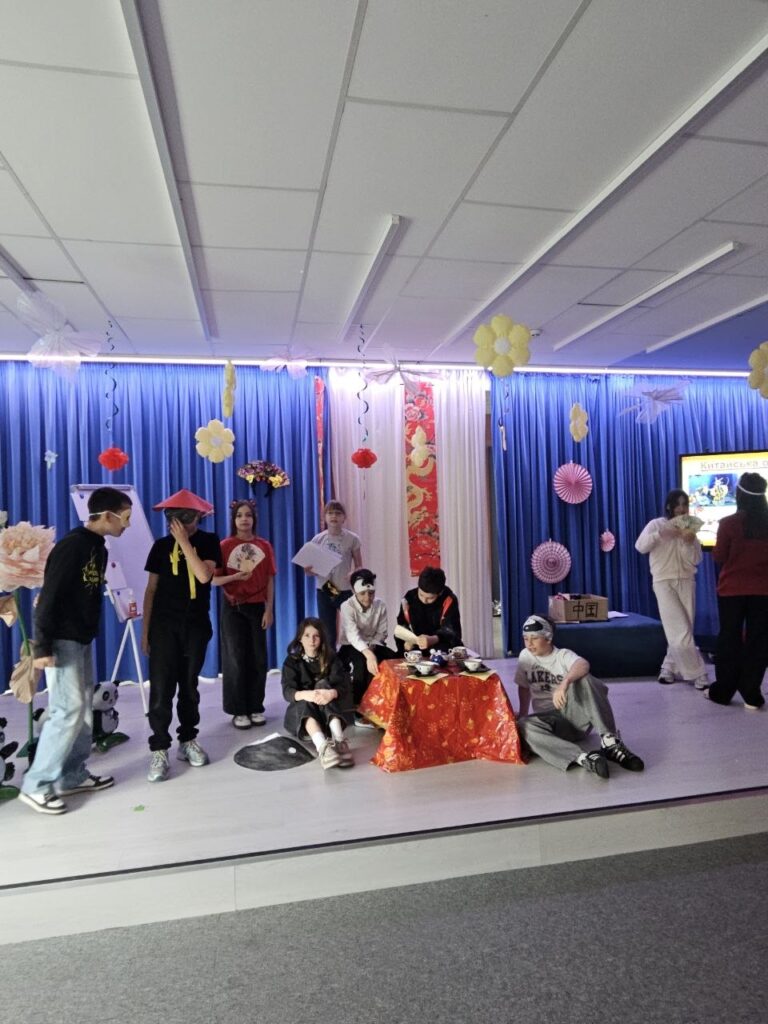
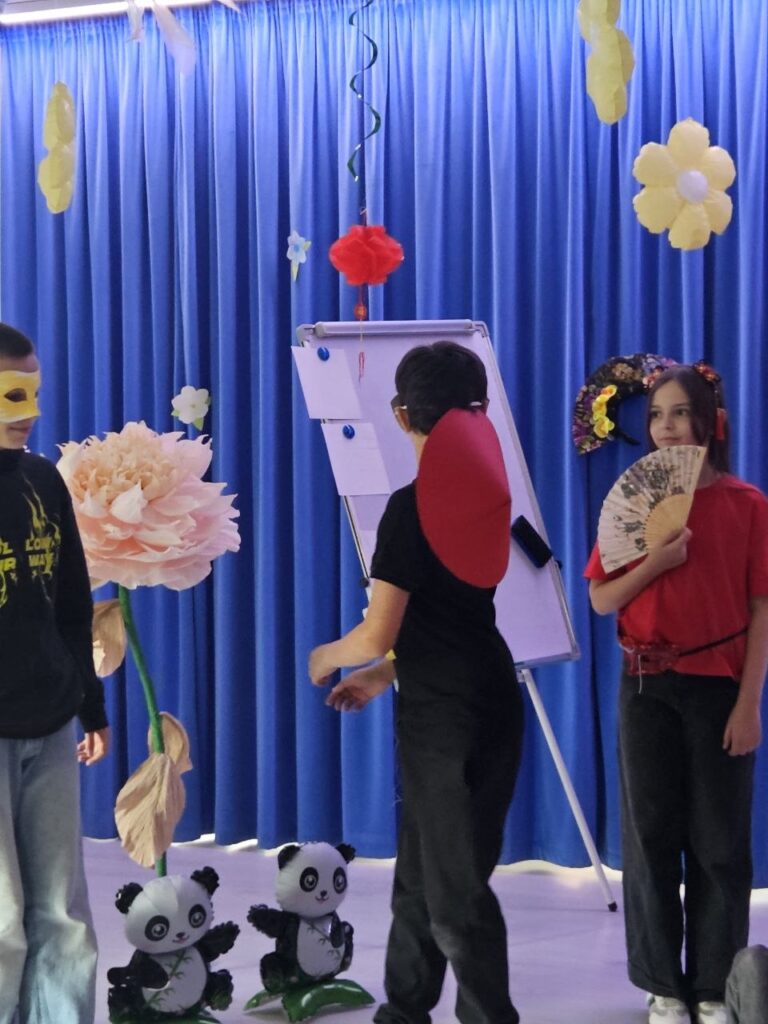
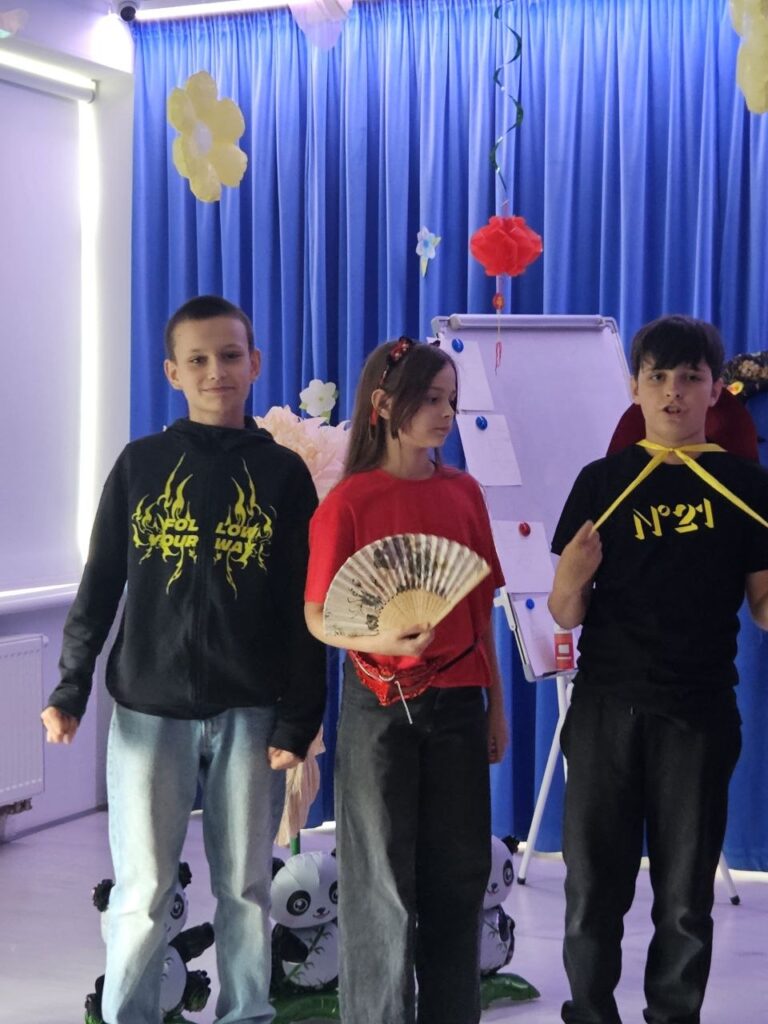
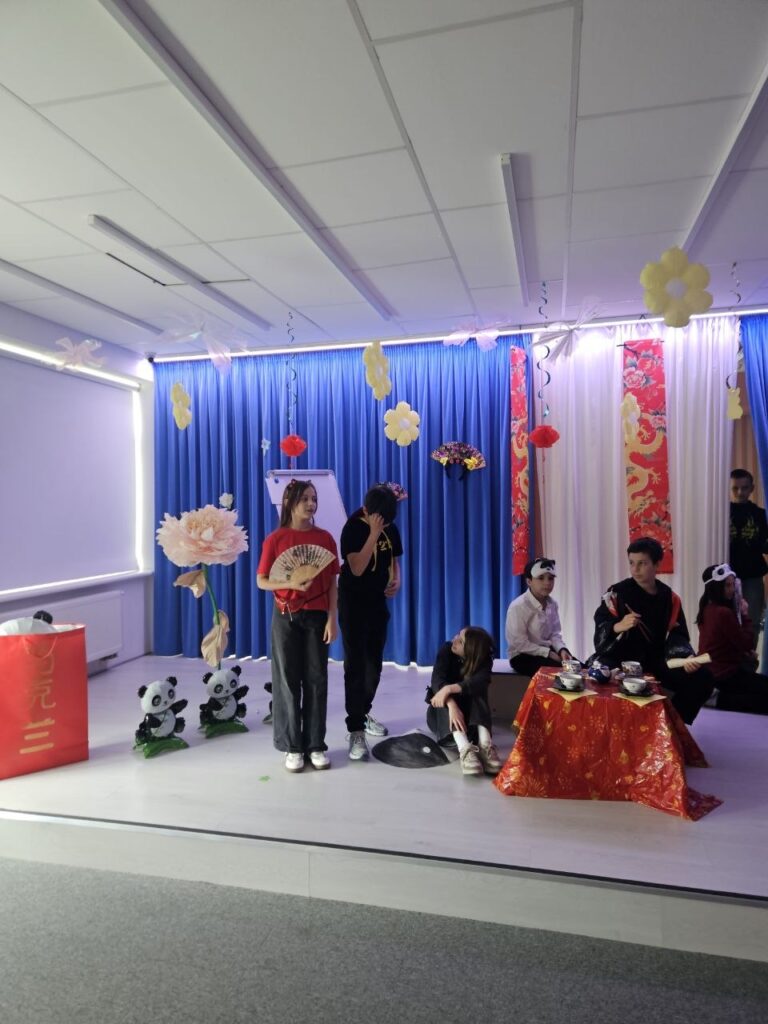
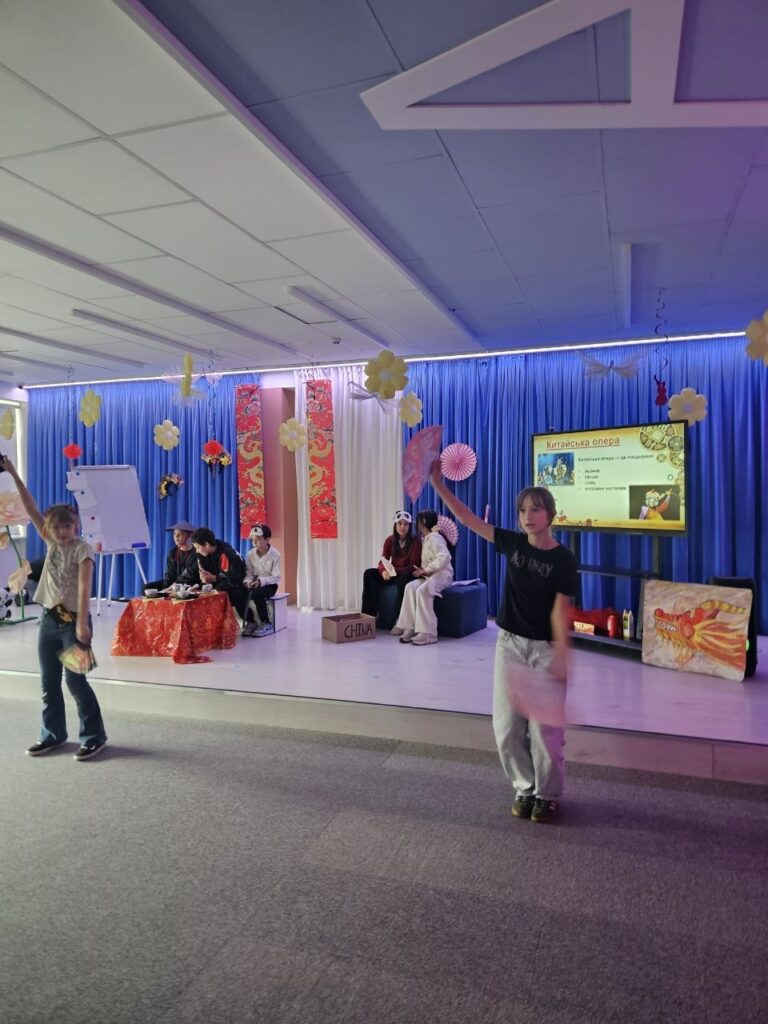
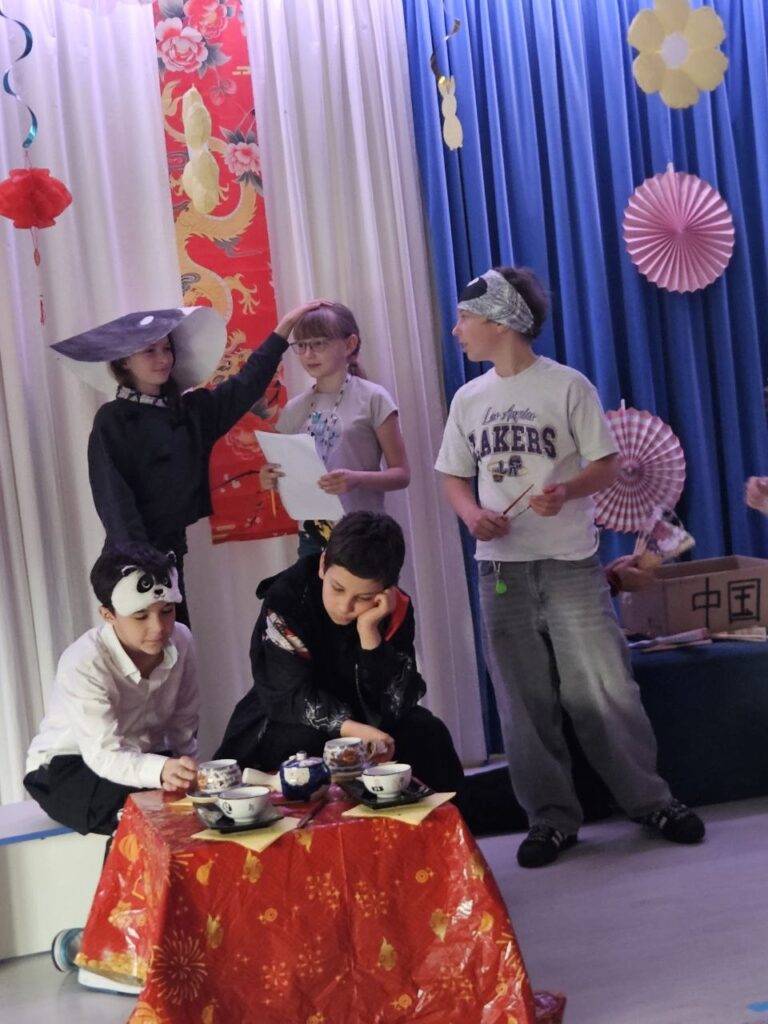
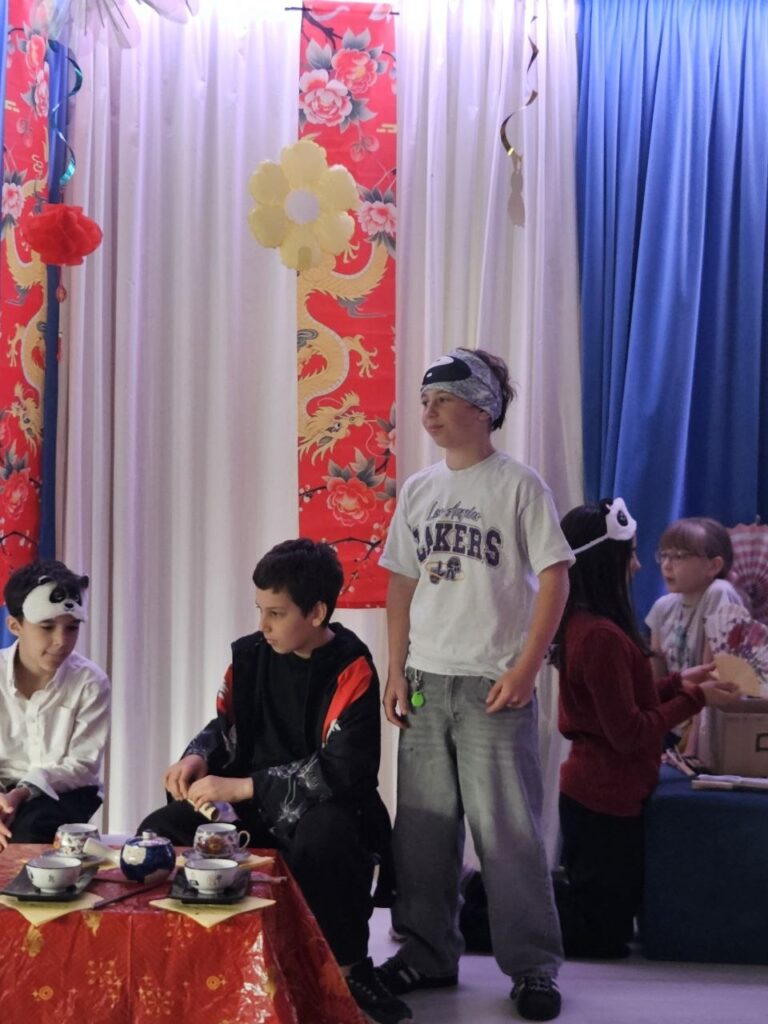
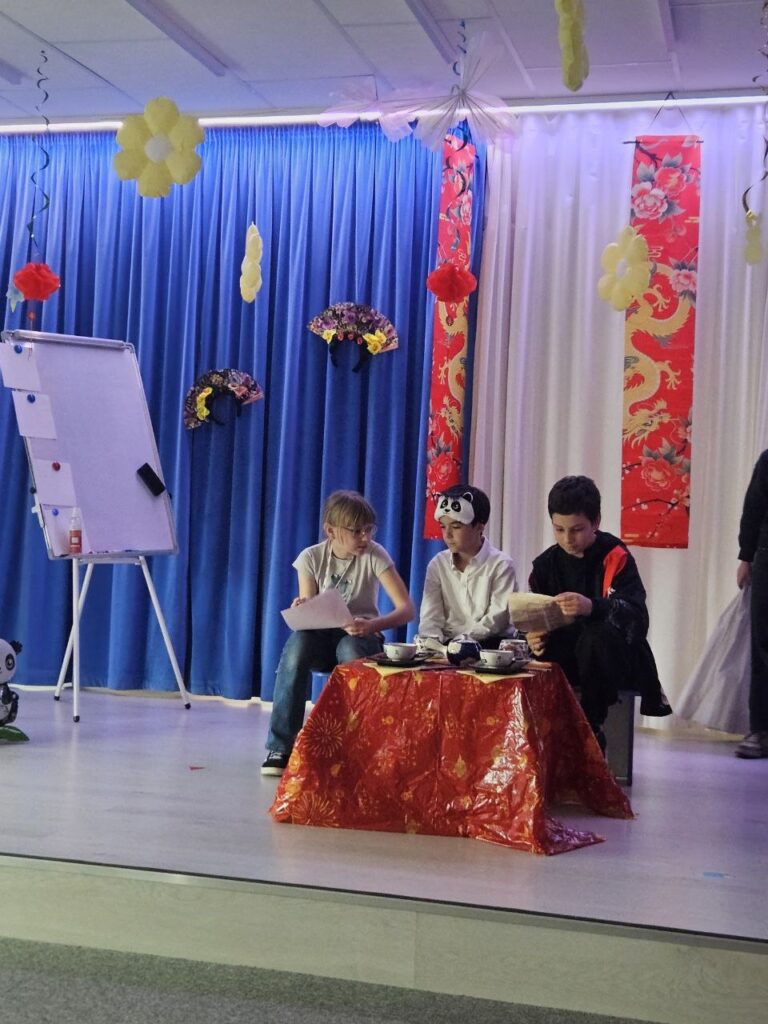
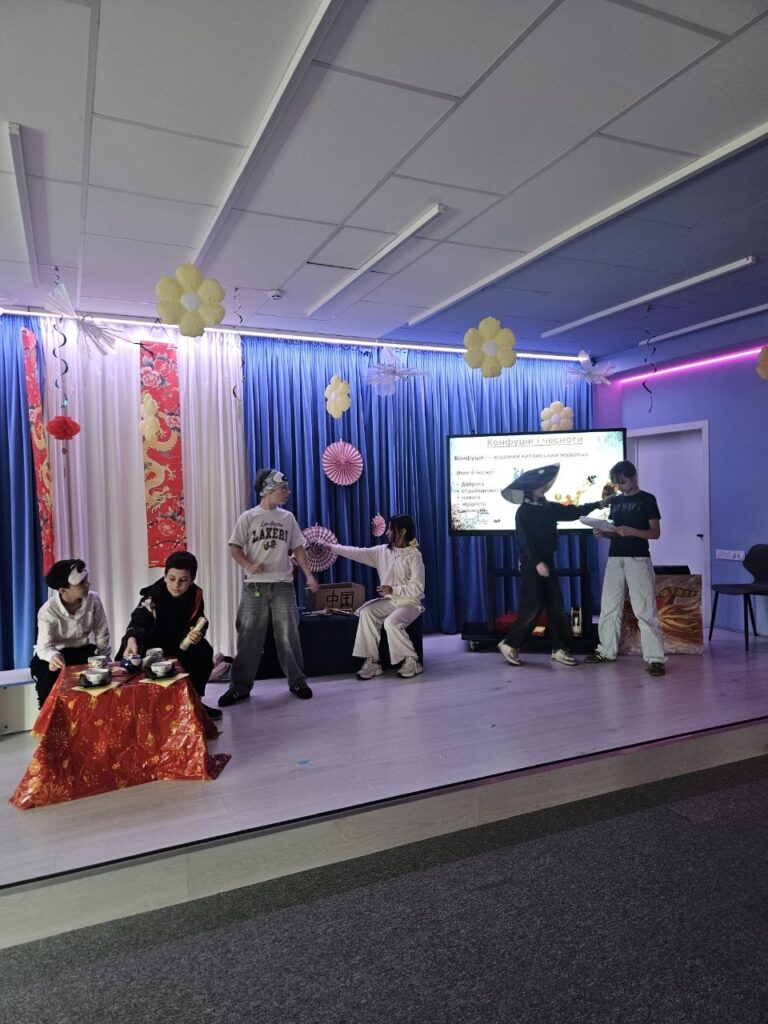
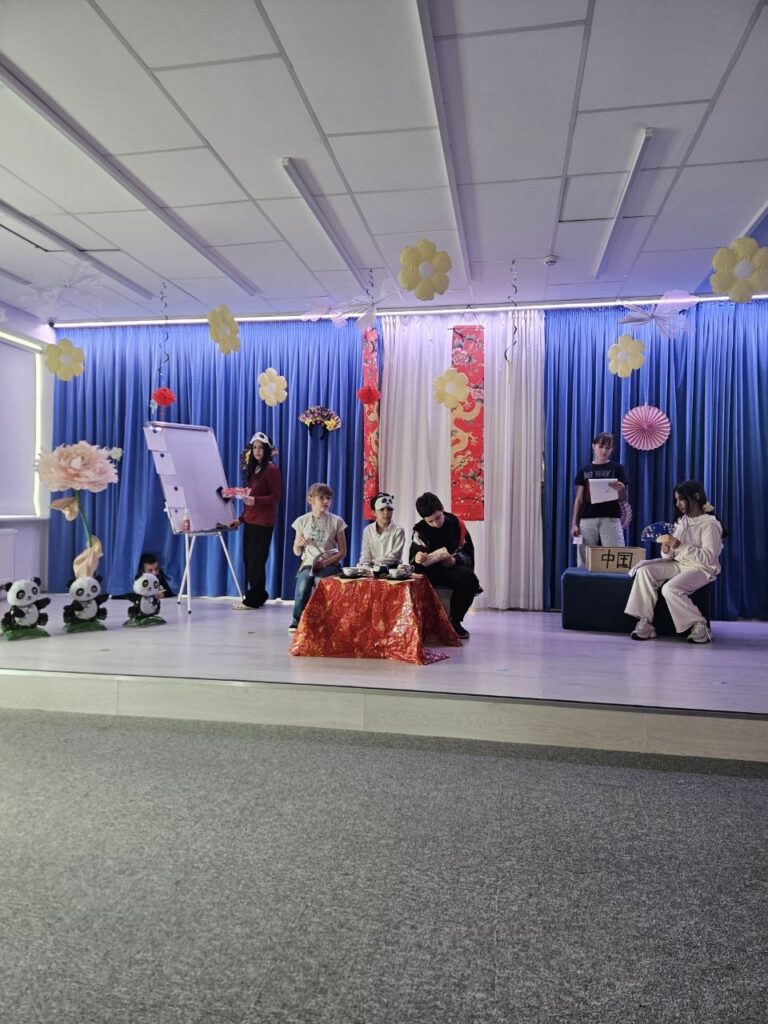
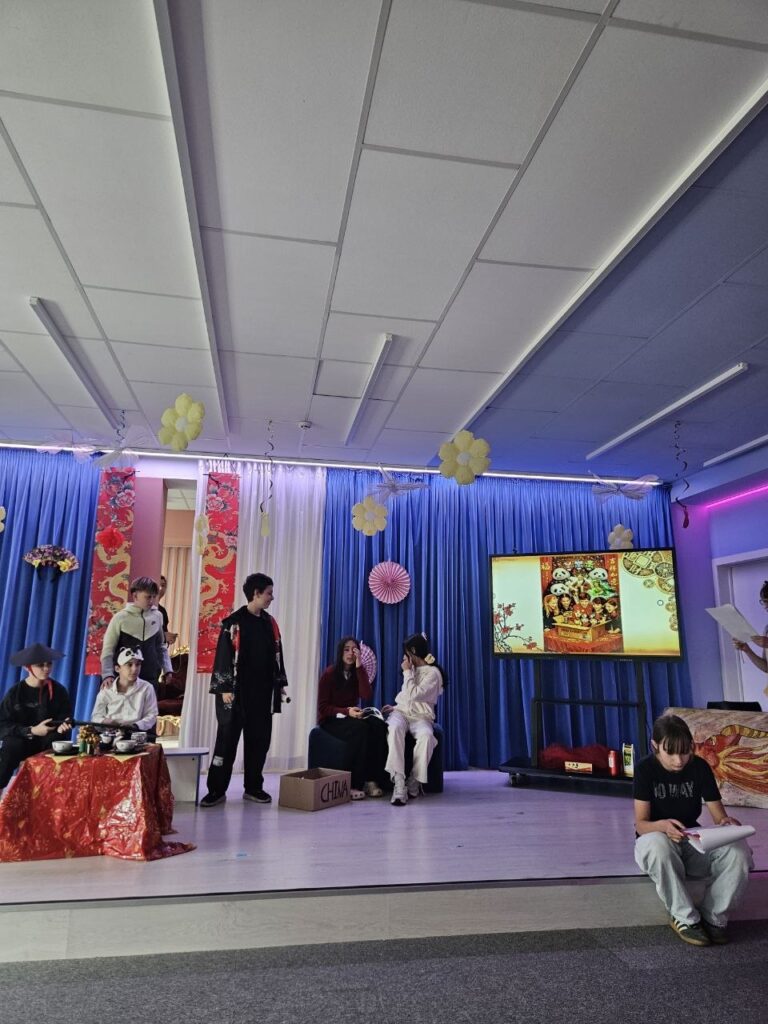
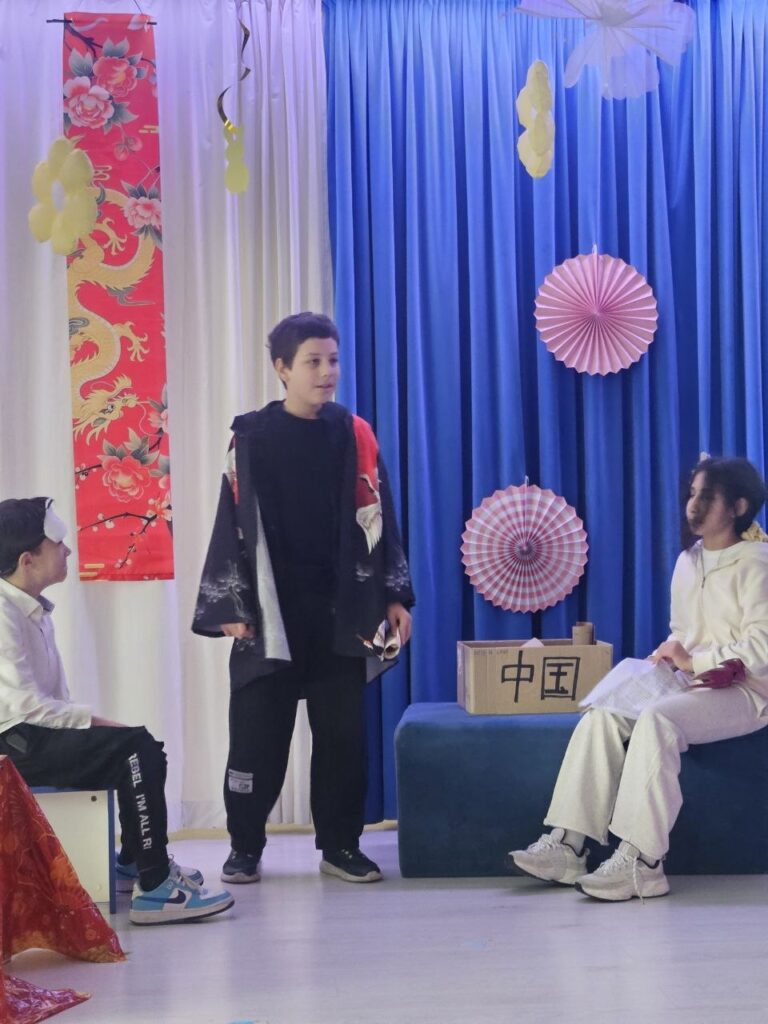
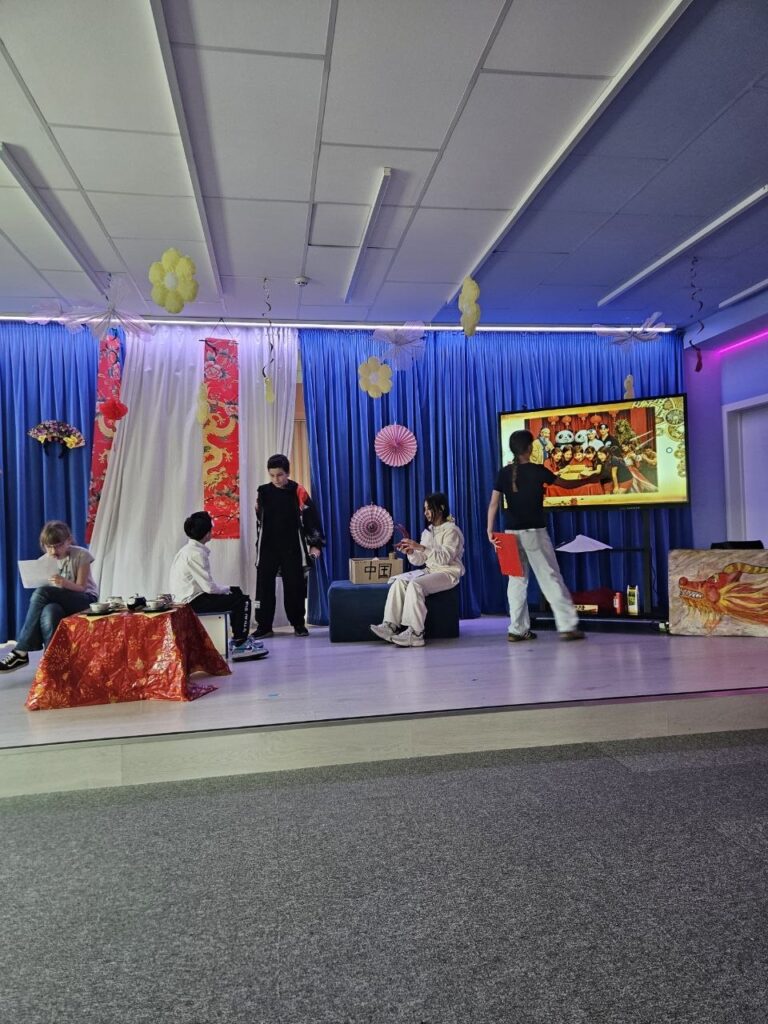
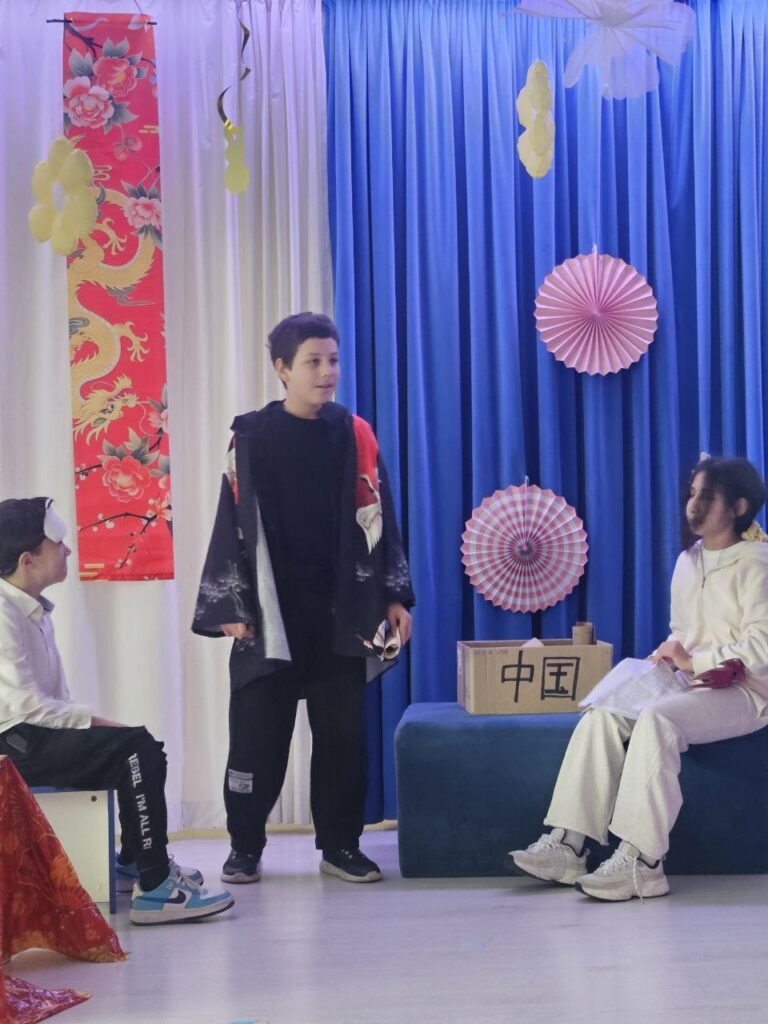
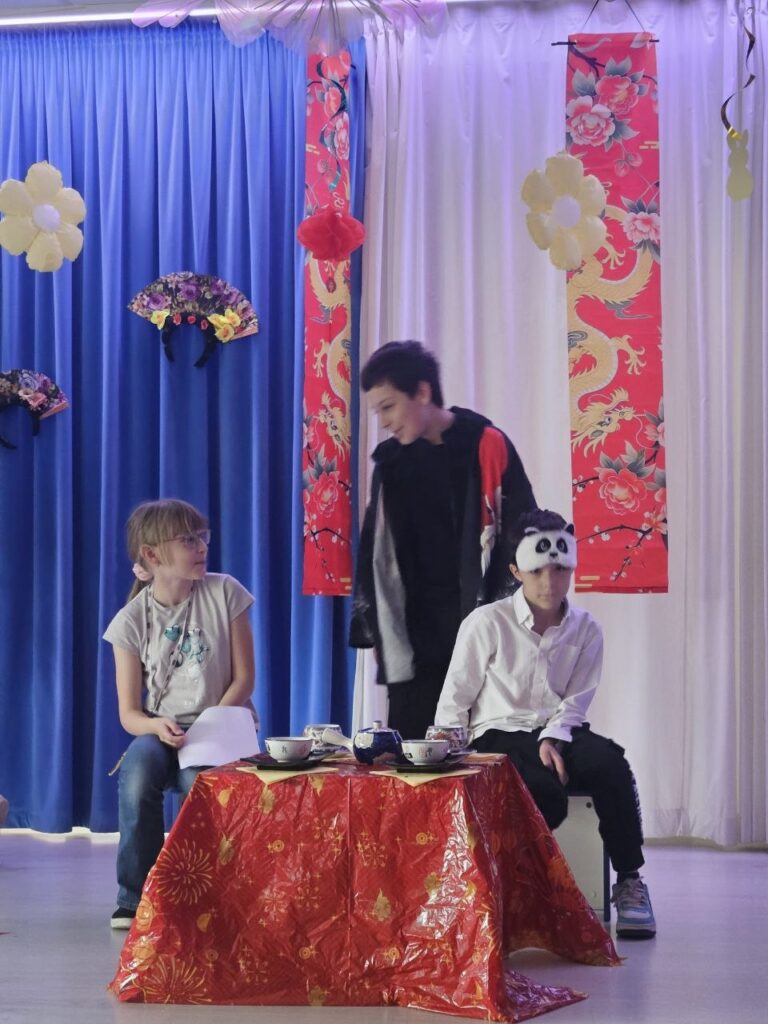
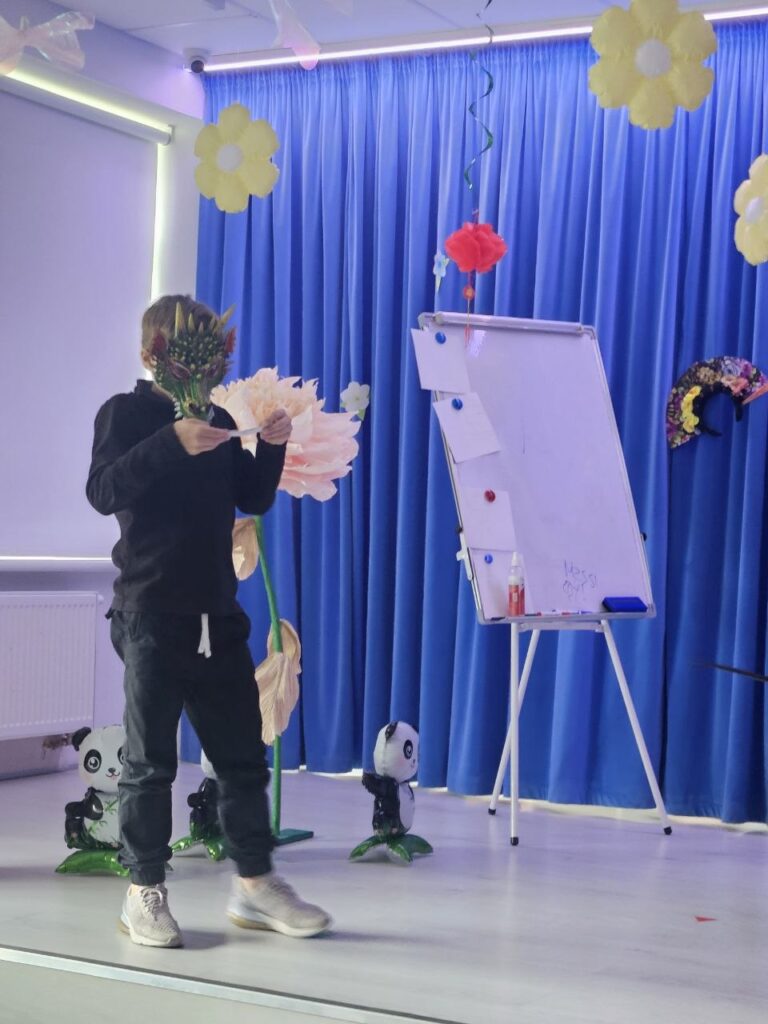
Today, the fifth grades brought everyone present to the magical world of China. During the school assembly, students presented a bright theatrical performance called “the mysterious parcel of China”. This event was a REAL Journey Into The Amazing World of Chinese culture, traditions and history. The audience had the opportunity to experience the atmosphere of China, learn more about the life of the Chinese people and see how multifaceted this country is.
The performance “mysterious parcel of China” was the result of a lot of preparatory work of students and teachers. Every element of the production was carefully thought out. Children created sets, learned interesting facts about China, prepared costumes and stage images. Thanks to this, the scene literally turned into a small China with its special flavor and atmosphere.
During the performance, the audience saw many symbols of China. Chinese legends, traditional images and cultural symbols came to life on the stage. Special attention was drawn to bright costumes inspired by traditional Chinese clothing. Colorful colors, elegant ornaments and distinctive details helped create a real Chinese holiday atmosphere. The students not only demonstrated their acting skills, but also showed a deep understanding of Chinese culture.
The young actors impressed the audience with their confidence, creativity and teamwork. The performance showed how important it is to be able to work together to achieve a common goal. Each participant contributed to the creation of this amazing trip to China. It was thanks to the cohesion and creativity of the fifth grades that the performance became a bright event in school life.
The audience had the opportunity to see how deeply the children got acquainted with the culture of China. From the costumes and scenery to the smallest details of the stage design, everything showed respect for the history and traditions of China. Students presented interesting facts about Chinese holidays, traditions, art and everyday life. Thanks to this, the performance became not only entertaining, but also informative.
China is one of the oldest civilizations in the world. The history of China goes back more than four thousand years. For centuries, China has been a center for the development of science, art, and culture. In various historical periods, China was ruled by powerful emperors who created majestic palaces, cities, and defensive structures. One of the most famous symbols of China is the Great Wall of China, which stretches for thousands of kilometers. This grandiose structure is considered one of the greatest architectural achievements of mankind.
China is known for its rich cultural heritage. Chinese culture has been formed for many centuries and today continues to amaze the world with its originality. In China, family values, respect for elders, and preservation of traditions are of particular importance. The Chinese people have great respect for their history and cultural heritage.
China has given the world unique artistic traditions. Chinese painting, calligraphy, music and theater have a long history. A special place in Chinese culture is occupied by calligraphy – the art of beautiful writing. The Chinese consider calligraphy not only a way of writing text, but also a real art that reflects the inner world of a person.
Another interesting feature of China is its language. The official language of China is Chinese, also called Mandarin. Chinese is one of the most widely spoken languages in the world. It is spoken by more than a billion people. Unlike many other languages, Chinese uses hieroglyphs. Each character has its own meaning and history. Learning Chinese is considered quite a difficult, but at the same time very exciting process.
China is famous for its traditional holidays. One of the most important holidays in China is Chinese New Year. During this period, Chinese cities are decorated with red lanterns, and the streets are filled with festive performances and fireworks. Red color in China symbolizes happiness, success and well-being. That is why it can often be seen during festive events.
China is also known for its cuisine. Chinese cuisine is considered one of the most popular in the world. Different regions of China have their own culinary traditions and special dishes. Rice, noodles, vegetables, seafood and a variety of spices are an integral part of Chinese gastronomy. Chinese cuisine is characterized by a harmonious combination of tastes, aromas and colors.
Modern China is a real example of rapid development. Over the past decades, China has become one of the largest economies in the world. China’s major cities impress with their skyscrapers, modern architecture and technological advances. China is actively developing science, education, transport and industry.
Today, China is one of the world leaders in innovation. In China, modern robots are being created, artificial intelligence technologies are being developed, high-speed railways are being built, and large-scale space programs are being implemented. Chinese scientists and engineers are working to create future technologies that can change the lives of people around the world.
The development of transport in China is particularly impressive. China’s high-speed train network is one of the largest in the world. Modern trains allow you to quickly travel between different regions of the country. China is also actively developing electric transport and environmental technologies to make large cities more comfortable to live in.
China plays an important role in the global economy. Many products that are used in different countries of the world are made in China. At the same time, China is actively investing in the development of Science, Education and modern technologies. Experts believe that in the coming decades, China will continue to strengthen its position as one of the global centers of economic and technological development.
Digital technologies, artificial intelligence, robotics, green energy and Space Research occupy a special place among the current trends in China’s development. China is committed to achieving high results in renewable energy and reducing its environmental impact. That is why solar and wind power plants are being actively built in the country.
China is a country of contrasts, where ancient traditions are harmoniously combined with modernity. Here, near ancient temples, you can see ultra-modern skyscrapers, and centuries-old traditions coexist peacefully with the latest technologies. It is this unique feature that makes China so interesting to explore.
The trip to China, organized by AISU fifth-grade students, was a real celebration of knowledge, creativity and inspiration. Thanks to the performance “the mysterious parcel of China”, students demonstrated their talents, responsibility and desire to discover new cultures. They showed that studying other countries helps to better understand the world, develops respect for different peoples and broadens your horizons.
China remains a country that admires with its history, culture, language, traditions and achievements. The more we learn about China, the more interesting new facts we discover. That is why getting to know China has become not just an educational project for AISU students, but a real trip to one of the most outstanding countries in the world. By studying China today, we better understand the world of tomorrow, because China continues to play an extremely important role in the global development of humanity.
Chinese traditions
Chinese traditions belong to the oldest and most interesting cultural heritage of mankind. For thousands of years, Chinese traditions have been formed under the influence of historical events, philosophical teachings, religious beliefs and the peculiarities of the life of the Chinese people. That is why today Chinese traditions are of great interest to people from different parts of the world. Chinese traditions cover all areas of life – from family relations and parenting to holidays, art, cooking and attitude to nature. By studying Chinese traditions, we discover a wonderful world of harmony, respect and wisdom that has been preserved for many centuries.
Chinese traditions have very deep historical roots. Even in ancient times, the inhabitants of China created their own system of values, which was based on respect for elders, love for family and the desire for knowledge. Chinese traditions were formed under the influence of such outstanding thinkers as Confucius, whose ideas remain relevant even in the modern world. It is thanks to these philosophical views that Chinese traditions pay special attention to the upbringing of a person, his moral qualities and responsibility to society. Chinese traditions teach you to honor your parents, help your loved ones, and take care of harmony in relationships between people.
One of the most important features that Chinese traditions have is the cult of the family. Chinese traditions teach that everyone should respect their parents, grandparents. Older family members enjoy great authority, and their advice is considered very valuable. Even in modern China, many families gather together for holidays and important events. Chinese traditions help maintain strong family ties that are passed down from generation to generation.
A special place among what Chinese traditions include IS occupied by celebrations. The most famous holiday is Chinese New Year. Chinese traditions associated with this holiday have a long history. Before the holiday, people carefully clean their homes to get rid of old failures and invite good luck. The houses are decorated with red lanterns and paper decorations. Chinese traditions consider red to be a symbol of happiness, well-being and success. On New Year’s Eve, families gather at a large table, exchange wishes and give their children red envelopes with money.
Another well-known holiday that reflects Chinese traditions is the Lantern Festival. This is a bright end to the new year’s celebrations. On this day, the streets of cities and villages are decorated with thousands of Lanterns of various shapes and sizes. Chinese traditions associate the light of lanterns with hope, happiness and new opportunities. People take part in festive processions, admire the illumination and make wishes for the future.
Chinese traditions are closely connected with nature. For centuries, the Chinese believed that a person should live in harmony with the world around them. That is why Chinese traditions pay great attention to natural phenomena, changing seasons and preserving the environment. Many ancient Chinese teachings state that true happiness is possible only when a person lives in harmony with nature and the environment.
Chinese tea drinking traditions deserve special attention. For the Chinese, tea is not just a drink, but a whole culture. Chinese tea drinking traditions were formed thousands of years ago and today remain an important part of life. The tea ceremony helps to create an atmosphere of calm, concentration and respect between people. Chinese traditions teach you to enjoy every moment and appreciate the simple joys of life.
Chinese traditions are also reflected in the national cuisine. Chinese cuisine is known all over the world for its variety. Chinese food traditions are based on a balance of tastes, colors and useful properties of products. Dishes are often prepared in such a way as to combine sour, sweet, salty, bitter and spicy. Chinese traditions believe that food should be not only delicious, but also healthy.
Dragons occupy an important place among what Chinese traditions symbolize. In Chinese culture, the Dragon is a symbol of strength, wisdom, well-being and good luck. Unlike many European Legends, where dragons are often depicted as dangerous creatures, Chinese traditions give the Dragon positive qualities. That is why dragons often become the main characters of festive processions and celebrations.
Chinese traditions are also known for their art. Calligraphy, painting, music, and theater are particularly important in Chinese culture. Chinese traditions consider art a way of developing the inner world of a person. Many Chinese artists devote years to improving their skills, because Chinese traditions value perseverance, patience, and the pursuit of excellence.
Modern China is developing rapidly, but Chinese traditions remain an important part of society. Even in large metropolitan areas, people continue to celebrate traditional holidays, honor their ancestors and observe many customs. It is this combination of modernity and heritage that makes Chinese traditions particularly interesting for explorers and tourists.
Why do Chinese traditions pay so much attention to the family? Chinese traditions consider the family to be the foundation of society. The family helps a person to gain support, upbringing and life wisdom. That is why Chinese traditions teach you to respect your elders and take care of your younger ones.
Why is red so often used in Chinese traditions? Chinese traditions associate red with happiness, success, and protection from adversity. That is why during the holidays you can see a lot of red jewelry, lanterns and festive clothes.
What animals have a special meaning in Chinese traditions? Chinese traditions especially honor the Dragon, Tiger, Phoenix and Crane. Each of these animals symbolizes certain virtues: strength, wisdom, longevity or harmony.
Why is tea so important for Chinese traditions? Chinese traditions view tea as a symbol of respect, hospitality and peace. During the Tea Party, People can socialize, relax, and strengthen friendships.
Do Chinese traditions affect modern life? Yeah. Despite the rapid development of technology, Chinese traditions remain an important part of everyday life. Many people adhere to ancient customs, celebrate traditional holidays and pass on cultural heritage to their children.
Why is the dragon a symbol of China? Chinese traditions consider the dragon a symbol of strength, prosperity and wisdom. In many legends, The Dragon helps people and brings good luck.
What gifts are usually given according to Chinese traditions? Chinese traditions recommend giving symbolic gifts that bring happiness and well-being. For example, fruits, tea, sweets, or beautiful decorative items.
Why have Chinese traditions survived to this day? Chinese traditions have been passed down from generation to generation for thousands of years. The Chinese people are very careful about their cultural heritage and strive to preserve it even in the modern world.
Chinese traditions are a real treasure trove of World Culture. They combine the wisdom of many generations, respect for the family, love of nature, the desire for harmony and spiritual development. Chinese traditions help people keep in touch with the past, understand their own culture, and build a future based on proven values. By studying Chinese traditions, we better understand not only China, but also the universal principles of respect, kindness and mutual understanding. That is why Chinese traditions continue to delight millions of people around the world and remain a source of inspiration for new generations.
Chinese culture
Chinese culture as an amazing legacy of millennia.
Chinese culture is one of the oldest and greatest cultures in the world. For many millennia, Chinese culture has been shaped by historical events, philosophical teachings, art, science, and folk traditions. Today, Chinese culture continues to delight millions of people with its originality, depth and uniqueness. By studying Chinese culture, we discover a world of wisdom, harmony, and respect for history. It is Chinese culture that helps us understand why China has become one of the most influential countries of our time.
Chinese culture is a unique combination of ancient traditions and modern development. Despite rapid technological progress, Chinese culture continues to preserve its historical values and pass them on from generation to generation. In many Chinese families, children learn about the history of their country from an early age, learn folk customs and respect the cultural heritage of their ancestors. That is why Chinese culture remains alive and relevant even in the XXI century.
The history of Chinese culture goes back more than four thousand years. During this time, Chinese culture has gone through numerous stages of development, created many artistic masterpieces and enriched the world civilization with important discoveries. It was Chinese culture that gave humanity paper, Compass, printing and gunpowder. These inventions changed the course of world history and influenced the development of many peoples.
Philosophy occupies a special place in the life of the Chinese people. Chinese culture developed for many centuries under the influence of the teachings of Confucius. His ideas of respect for elders, love of family, honesty and responsibility have become an important part of Chinese society. Chinese culture teaches people to strive for harmony, self-improvement, and peace. That is why even today many Chinese people adhere to the principles formulated thousands of years ago.
Chinese culture is impossible without family values. For the Chinese people, the family has always been the foundation of society. Chinese culture teaches you to respect your parents, take care of your elders, and maintain family ties. For example, during major holidays, millions of people return home to spend time with their families. This tradition demonstrates how important kinship relations remain for modern China.
One of the most striking manifestations of how rich Chinese culture is is folk holidays. The most famous holiday is Chinese New Year. During this period, Chinese culture comes to life in a special way. The streets are decorated with red lanterns, festive processions are held, people give gifts and wish each other happiness. Chinese culture attaches great importance to symbols, so every detail of the celebration has its own special meaning.
Chinese culture is famous for its art. Over the centuries, Chinese craftsmen have created unique paintings, sculptures, musical works, and theatrical productions. Chinese culture especially values the beauty of nature, the harmony of forms and the inner content of works of art. For example, traditional Chinese paintings often depict mountains, rivers, trees, and misty landscapes. Through such paintings, Chinese culture conveys the philosophy of human unity with nature.
An important component of what is called Chinese culture is calligraphy. In China, beautiful writing is considered a real art. Chinese culture considers calligraphy not only as a way to record information, but also as an opportunity to express the character and inner world of a person. Many Chinese schoolchildren are still learning the art of writing hieroglyphs.
Chinese culture is inextricably linked to language. Chinese is one of the oldest languages in the world. A special feature of Chinese culture is the use of hieroglyphs, each of which has its own meaning and history. Chinese culture, thanks to its writing, has preserved a huge number of literary works, historical documents and philosophical works.
The Chinese tea drinking culture deserves special attention. For the Chinese, tea is more than a drink. Chinese culture has created a true tea philosophy that teaches calmness, concentration, and respect for the other person. For example, during a traditional tea ceremony, each action has its own symbolic meaning. This is why Chinese culture is often associated with inner harmony and wisdom.
Chinese culture is also reflected in the national cuisine. Chinese cuisine is one of the most popular in the world. Chinese culture pays great attention to the combination of tastes, colors and textures of dishes. For example, traditional Chinese jiaozi dumplings symbolize wealth and well-being, and long noodles are considered a symbol of longevity. Through culinary traditions, Chinese culture conveys important life values and wishes.
Another striking symbol that represents Chinese culture is the Dragon. In Chinese culture, the dragon symbolizes strength, prosperity, wisdom, and happiness. Unlike many European Legends, where dragons are often depicted as dangerous creatures, Chinese culture gives the Dragon positive qualities. That is why during the big holidays you can see the famous dragon dance.
Chinese culture has rich architectural traditions. Majestic temples, ancient palaces and the famous Great Wall of China demonstrate the high level of skill of ancient builders. Chinese culture has always sought to create structures that are in harmony with the environment. That is why many of China’s architectural monuments are now included in the list of the most outstanding World Heritage sites.
In the modern world, Chinese culture continues to develop actively. Chinese films, music, literature, and art are becoming increasingly popular in different countries. Chinese culture successfully combines centuries-old heritage with the latest technologies. The younger generation of Chinese people actively uses modern digital opportunities, but at the same time does not forget about national traditions.
Today, Chinese culture has a great influence on World Education. Chinese language and cultural learning centers are being opened in many countries. Thousands of people are eager to learn more about China’s history, art, and philosophy. Chinese culture attracts researchers with its versatility and ability to maintain uniqueness over the centuries.
The peculiarity of modern China is that Chinese culture continues to be an important part of State Development. Classical literature is taught in schools, folk crafts are supported, festivals and cultural events are held. Thanks to this, Chinese culture is not only preserved, but also actively popularized among young people.
Why is Chinese culture considered one of the oldest in the world? Chinese culture has been formed for more than four thousand years. It has preserved a huge number of historical monuments, literary works, traditions and philosophical teachings that have survived to this day.
What does Chinese culture most symbolize? Chinese culture is often associated with dragons, hieroglyphs, tea, red lanterns, The Great Wall of China, and traditional holidays.
Why is family so important to Chinese culture? Chinese culture is based on respect for parents and older family members. The family is considered the foundation of a harmonious society and a source of life support.
What role does tea play in Chinese culture? Chinese culture sees tea as a symbol of hospitality, respect and inner harmony. The tea ceremony is an important part of China’s cultural heritage.
Why does Chinese culture use hieroglyphs? Hieroglyphs are the traditional writing system of China. Chinese culture has preserved them for thousands of years, and many signs have not only linguistic, but also cultural significance.
How does Chinese culture affect the world? Chinese culture is influenced by art, literature, philosophy, cuisine, technology, and education. Every year, millions of people learn about Chinese culture through books, movies, and travel.
What examples of Chinese culture can you see today? Examples include Chinese New Year celebrations, tea ceremonies, calligraphy, martial arts, traditional opera, lantern festivals, and national cuisine.
Chinese culture is a real treasure of human civilization. It combines centuries-old wisdom, deep traditions, outstanding artistic achievements and the desire for harmony. Chinese culture teaches us to respect history, appreciate family ties, protect nature, and constantly improve. That is why Chinese culture continues to be admired by people all over the world. By studying Chinese culture, we not only get to know China, but also discover new ways to understand the world, people, and society. Chinese culture remains one of the most striking examples of how the legacy of the past can inspire the present and shape the future.
m. Kyiv, Drahomanova 1-B, AISU
p. Khodosivka, str. Feodosiya Pecherskyi, 55


