
Methods of raising children in kindergartens
Raising children is a complex and multidimensional process that requires an individual approach and special methods. Kindergartens use a variety of approaches that contribute to the comprehensive development of children, help form the basis for further learning and socialization. Let’s take a look at some popular parenting methods used in kindergartens:
1. The Montessori method is a pedagogical system developed by the Italian teacher Maria Montessori. The main idea of this approach is to create conditions for independent development of the child. The basic principles of the Montessori method include: 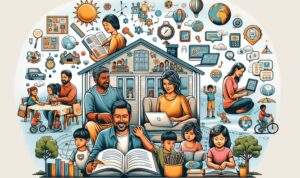
- Free choice of activities: children can choose activities according to their own interests, which allows them to develop independence and confidence.
- Individual approach: each teacher works with the child according to his pace of development.
- Learning through practical activities: the use of special materials that stimulate the development of motor skills, attention, memory and logical thinking.
- Creating an organized environment: the space in the group should be organized in such a way that the child can easily find the necessary materials and work in a comfortable environment.
2. Raid is a method based on the idea that play is an important tool for a child’s development. The game helps your child learn new skills, interact with other children, learn to cooperate, and resolve conflicts. Within this method:
- Game situations are used as a learning process. Teachers organize a variety of games that stimulate social skills, creativity, speech and mental development.
- Group activity. It is important to perform tasks together, which develops teamwork, communication and collaboration skills.
3. The Waldorf method, based on the teachings of Rudolf Steiner, focuses on the comprehensive development of the child, in particular on the harmonious development of his mental, physical and emotional abilities. This approach includes:
- Creative activities: manual labor, drawing, music, dance and theater occupy an important place in the educational process.
- Rhythm and repetition: emphasizes the importance of rhythmic activities that allow children to adapt to changes in the world around them and develop inner harmony.
- Incompleteness of knowledge: Waldorf pedagogy does not seek to give the child all the answers, but instead encourages search and learning.
4. Pedagogy of developmental learning (according to D. Elkonin and V. Davydov).
the method of developmental learning assumes that learning should be aimed at developing the child’s skills and abilities of independent cognition, creativity and problem solving. Main features:
- Active role of the child in learning: the child is not a passive recipient of knowledge, but an active participant in the educational process.
- Problem-oriented tasks: tasks that are assigned to children contribute to the development of logical thinking, independence and critical thinking.
- Individualization of learning: teachers take into account the level of development of each child, his interests and needs.
5. The Reggio-Emilia Approach. This approach originated in Italy and focuses on the importance of working with a child through interaction, observation and dialogue. Basic principles of the Reggio-Emilia approach:
- The child as an active participant in the learning process. It is important to take into account the child’s thoughts and ideas when organizing educational activities.
- Project activities: children work together with teachers on projects, which encourages their creativity, self-expression and teamwork.
- Process documentation. Maintaining documentation allows the teacher to understand how the child develops and adapt learning tasks.
6. Behaviorism in pedagogy is an approach based on the study of children’s behavior through the stimulation of desired actions and reactions. The following principles apply in kindergartens:
- Positive reinforcement: for positive behavior, the child receives encouragement (fame, praise, small gifts), which encourages him to repeat these actions.
- Behavior control: the teacher uses clear rules and structure to help children learn the right social skills.
- Repeatability: tasks and tasks should be repetitive to help your child learn new skills.
Each of these methods has its own unique focus and reflects different approaches to the child’s development. However, they all have a common goal – to create a favorable environment for development and learning, to help children learn new knowledge and skills, as well as to educate responsible and independent individuals. The choice of the method of education in kindergarten depends on the goals of teaching, the level of development of children and the characteristics of the teaching staff.
Effective methods of raising children
Raising children is a complex but exciting process that forms the personality of the future adult. It is important to find the right balance between love, discipline and developing the skills necessary for life. In this article, we will look at several effective parenting methods that help parents and teachers form a harmoniously developed child.
1. The natural consequences method is an effective way to teach responsibility.
One of the best ways to raise children is to allow them to experience the natural consequences of their actions on their own (of course, if this does not threaten their health and safety). For example, if a child refuses to wear a jacket in cold weather, they will freeze and next time they will understand the importance of warm clothing.
Why is this an effective method?
- The child independently draws conclusions from their actions.
- Responsibility is formed without excessive control on the part of adults.
- Increases the level of independence.
2. The active listening method is an effective way to develop emotional intelligence.
Active listening means that parents and caregivers listen carefully to the child, reflect their emotions and help them understand their own experiences. For example, if a child is crying because of a broken toy, instead of saying “Don’t worry”, it is better to say: “I see that you are very sad because of this. This is really frustrating.”
Why is this an effective method?
- The child feels supported and understood.
- Improves emotional intelligence and communication skills.
- The child learns to express their feelings and cope with them.
3. The positive example method is an effective way to teach correct behavior.
Children imitate adult behavior. If the parents themselves show respect, patience, honesty and responsibility, the child absorbs these values on a subconscious level. For example, if you want your child to clean up after themselves, it is important that you also maintain order at home.
Why is this an effective method?
- The child learns not through words, but through actions.
- Conscious behavior is brought up.
- Parent-child relations are improving.
4. The “time together” method is an effective way to strengthen relationships.
In order for a child to be well-mannered, obedient and confident, he needs quality time with his parents. This can be walking together, playing games, reading books, or even cooking together. The main thing is full attention to the child without being distracted by the phone or TV.
Why is this an effective method?
- The child feels valued and loved.
- Trust and openness in relationships are formed.
- Reduces anxiety levels and improves behavior.
5. The reward and motivation system method is an effective way to encourage good behavior.
This method involves positive reinforcement, when the child receives praise, stickers, extra time for a favorite activity, and so on for good behavior. For example, if your child regularly helps around the house, you can make a special table of achievements for them with stickers and small gifts for success.
Why is this an effective method?
- The child better understands the relationship between actions and their consequences.
- A positive attitude to responsibility is formed.
- Increases motivation to learn and do good deeds.
6. The method of family rules and agreements is an effective way to establish discipline.
Clear rules help children understand what is possible and what is not. For example, if there is a rule “we don’t interrupt when someone is talking”, the child will gradually learn to wait for their turn in the conversation. It is important that the rules are clear, consistent, and fair.
Why is this an effective method?
- The child begins to understand the limits of what is allowed.
- The number of conflicts in the family decreases.
- A responsible attitude to their actions is formed.
Effective methods of raising children help not only to form correct behavior, but also to strengthen the relationship between parents and children. It is important to combine different approaches, taking into account the character and characteristics of each child. The key is to be patient, consistent, and loving mentors for your children.
Modern methods of raising children
Raising children in the modern world requires new approaches that correspond to changes in society, technologies and educational trends. Kindergartens are no longer limited to traditional teaching methods, but use the latest strategies that promote the development of intelligence, emotional intelligence, creativity and independence of the child. Let’s take a look at modern methods of raising children in kindergartens that help to unlock their potential:
1. STEM approach in education is a modern method of developing logical thinking.
STEM (Science, Technology, Engineering, Mathematics) is a technique that combines science, technology, engineering, and mathematics in a playful way. In modernprivate kindergartens children are engaged in design, simple scientific experiments, learn the basics of logic and digital technologies.
Why is this a modern method?
- Allows the child to learn through experiments and practical tasks.
- Develops critical thinking and problem-solving skills.
- Meets modern technological requirements of society.
2. The method of emotional intelligence (EQ-learning) is a modern method of developing emotional literacy.
The modern world requires not only knowledge, but also the ability to manage your emotions. Kindergartens use special techniques for developing emotional intelligence, in particular, learning to recognize emotions, manage them, and communicate effectively. Children are taught compassion, self-control, and constructive conflict resolution skills.
Why is this a modern method?
- Prepares children for social interactions in the team.
- Improves communication skills and mutual understanding.
- Helps children to be confident and cope with stressful situations.
3. The method of creative learning through art is a modern method of developing creative thinking.
In modern kindergartens, artistic methods are widely used, including drawing, music, theatrical performances and needlework. Children are allowed to express themselves through creative activities, which contributes to the development of imagination, flexibility of thinking and a non-standard approach to solving problems.
Why is this a modern method?
- Corresponds to modern trends in the development of a creative personality.
- Helps children express their emotions and thoughts freely.
- Forms the ability to express yourself and confidence in your own ideas.
4. The digital technology method (EdTech) is a modern method of interactive learning.
Educational technologies (EdTech) (new generation education) have become an integral part of learning. Some kindergartens use interactive whiteboards, educational tablets, educational applications, and digital games to teach children. The programs are aimed at developing logical thinking, speech, mathematical skills and spatial imagination.
Why is this a modern method?
- The use of technologies meets the latest educational standards.
- Children learn in the form of a game, which increases motivation.
- Develops the skill of working with modern digital devices.
5. The method of environmental education is a modern method of forming a responsible attitude to nature.
Taking into account global environmental challenges, modern kindergartens actively use methods of environmental education. Children are taught to take care of plants, understand the principles of Ecology, take care of the environment and understand the importance of resources.
Why is this a modern method?
- Meets current environmental issues.
- Forms ecological consciousness from an early age.
- Helps children feel responsible for nature and the world around them.
6. The gamification method is a modern method of learning through play.
Gamification is the use of game elements in the educational process. Educators use quests, ratings, rewards, and story games to motivate children to learn and interact socially. This makes the educational process interesting, exciting and effective.
Why is this a modern method?
- Increases children’s involvement in the learning process.
- Develops motivation and teamwork.
- Corresponds to modern psychological and pedagogical approaches to education.
Modern methods of raising children in kindergartens are aimed at the harmonious development of the individual, taking into account the needs of new generations. STEM training, emotional intelligence development, digital technologies, artistic approaches, environmental education and gamification are the methods that make the parenting process interesting, effective and adapted to modern realities. Choosing the right approach will help children adapt more easily to the future world and become successful individuals.
m. Kyiv, Drahomanova 1-B, AISU
p. Khodosivka, str. Feodosiya Pecherskyi, 55


